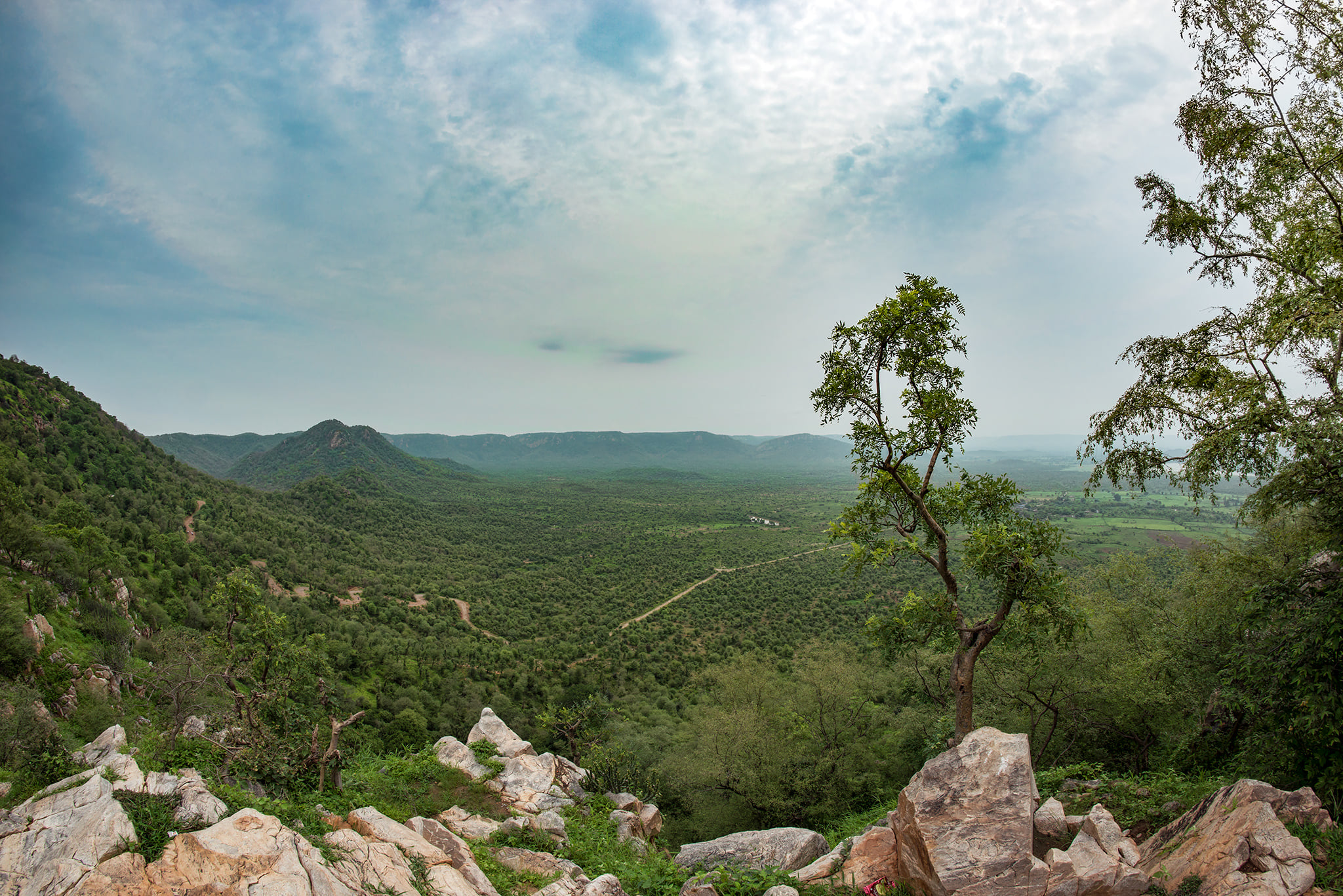
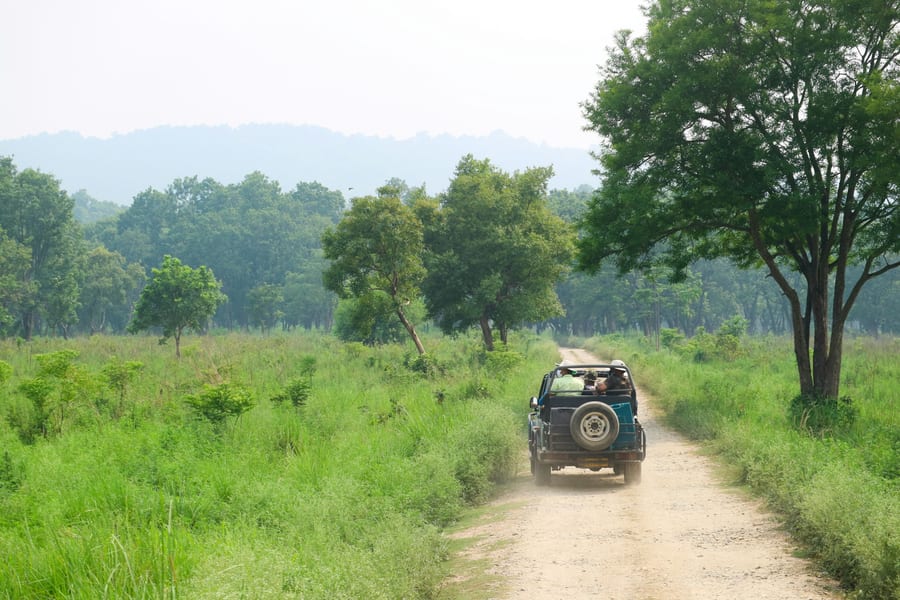
The green valley and rocky slopes of Sariska after the rains
Home / Discover Sariska / Sariska

Sariska Tiger Reserve

Alwar, Rajasthan: a royal hunting ground that became a sanctuary, lost every tiger it had, and then made conservation history bringing them back.

Tropical Dry and Thorny

Upon exploring through and around the Sariska Tiger Reserve one understands the inexplicable beauty displayed by the tropical dry deciduous and tropical dry thorny forests of India. The reserve is named after the tree ‘Siris’ (Albizia lebbeck), which bears beautiful fragrant powder-puff yellow flowers that grow into a fruit pod.

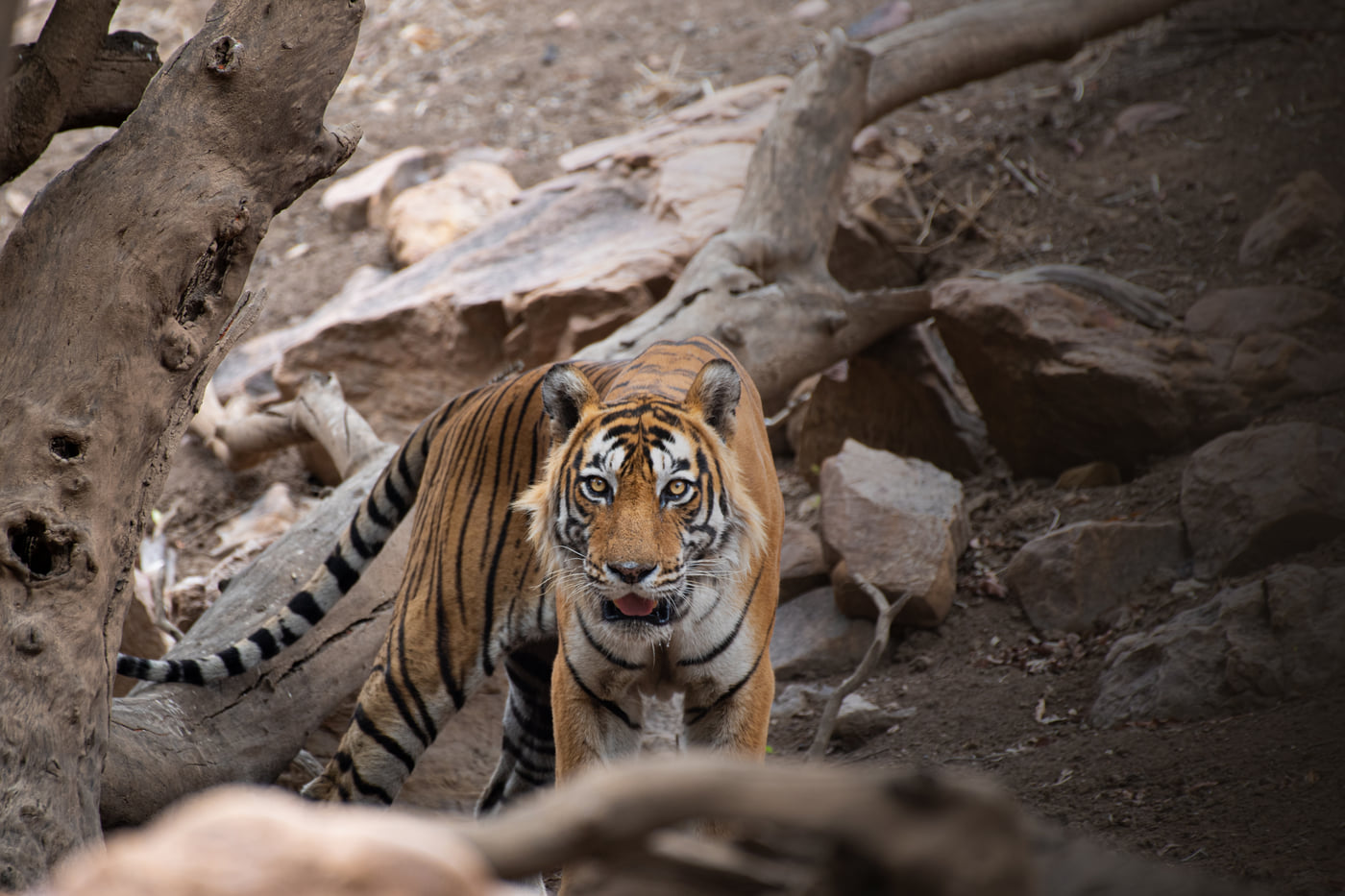
The reserve is dotted with numerous valleys, and during safaris with the slow-moving breeze brushing off the face, one gets to experience the picturesque view, especially during sunrise and sunset. The shrubs and the bushes mixed with tall meadow grasses give an excellent hiding spot for ambush predators like the tiger to prey on sambar deer, spotted deer, and blue-bull antelope.

A tiger stepping out from behind fallen timber and rock in Sariska
Kankwari Fort, built in the 17th century under Aurangzeb

History

From Hunting Ground to Tiger Reserve

Sariska Tiger Reserve history begins long before it was a reserve at all. Before independence, Sariska was used as a hunting ground for the royal family of Alwar, which used to invite high-ranked British personnel for hunting in order to please them.

Read MoreRead Less

After independence, the Government of India declared Sariska a wildlife reserve in 1955. In 1958 it was declared a wildlife sanctuary, and when Project Tiger was launched in 1973, Sariska was declared a tiger reserve a few years later, in 1978.

  • 1955Declared a wildlife reserve
  • 1958Declared a wildlife sanctuary
  • 1973Project Tiger launched nationally
  • 1978Declared a tiger reserve
Explore the Heritage

Tiger Reintroduction

A Global First

Despite its protections, a shocking revelation emerged in 2004; Sariska had lost all of its tigers due to rampant poaching and mismanagement. This critical situation demanded immediate intervention, sparking one of the world’s most extensive tiger relocation initiatives.

In 2008, Sariska achieved a global first by successfully relocating tigers to their habitat, translocating them from Ranthambore National Park to ensure genetic diversity and repopulation. 8 tigers were airlifted by helicopter between 2008 and 2011; the translocation was judged a success when the second tigress moved gave birth to 2 cubs in 2012.

Conservation continues with advanced monitoring, radio collars, and camera traps that track movement and deter poaching, alongside increased patrolling and stringent forest regulations.

2004 Last tiger lost
8 Tigers airlifted, 2008–2011
56 Tigers as of June 2026
22 Of them cubs
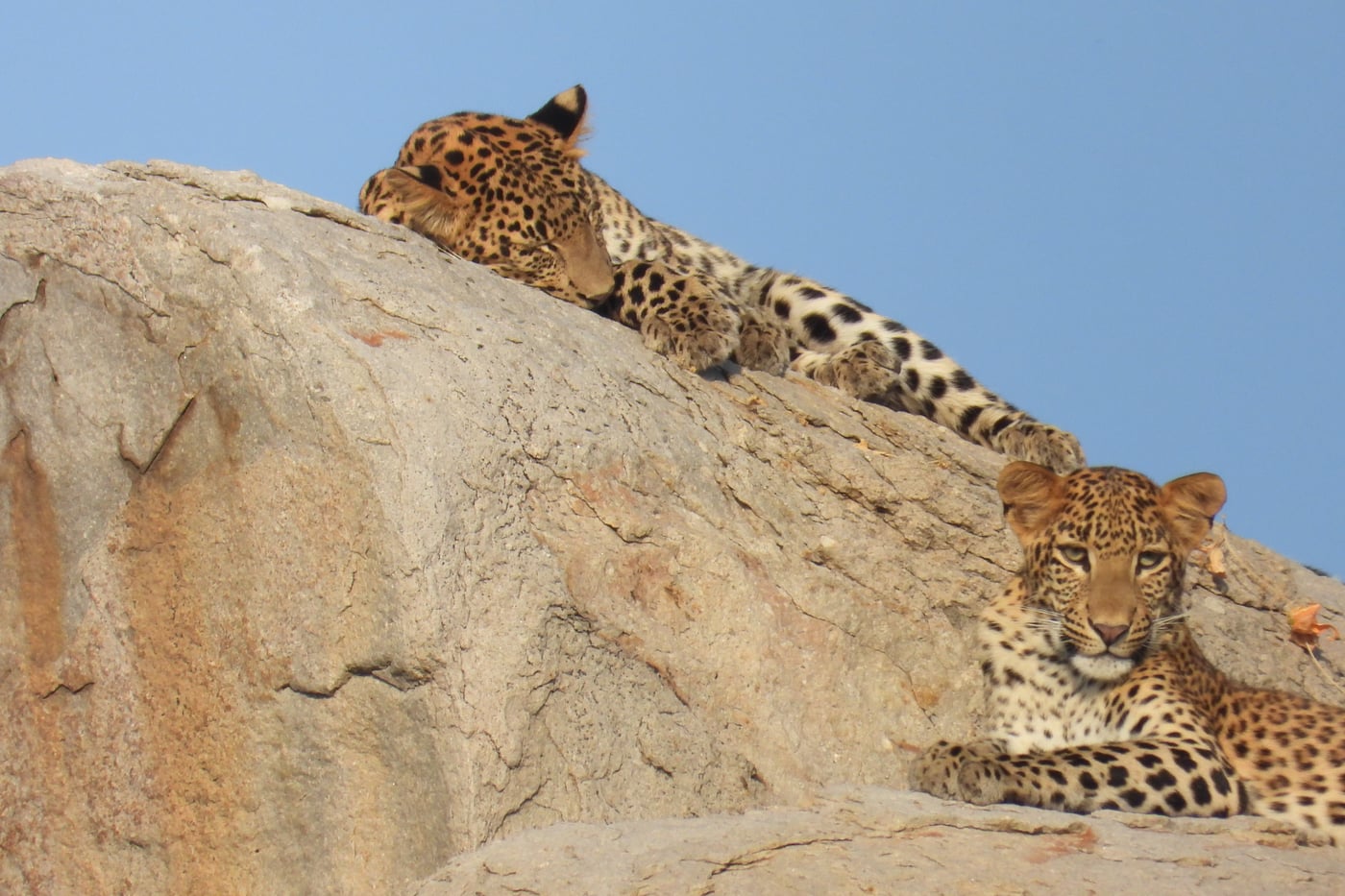
Two leopards resting on a rock outcrop
Leopards thrive here in healthy numbers

Wildlife

What Else the Forest Holds

The tiger is the pride of Sariska, but another hyper-carnivore, the leopard, thrives in healthy numbers and is a draw in its own right. The combined deer and antelope population is around 20,000 individuals, seen frequently at any time of day.

Read MoreRead Less

Other animals to look out for are grey langur, Indian boar, striped hyena, ruddy and grey mongoose, golden jackal, and jungle cat. Vultures nest on the steep slopes of the hilly terrain and are seen soaring at noon, scanning for carcasses; India is home to 9 vulture species, of which 6 are recorded in Sariska.

  • LeopardsApprox. 220 individuals
  • Deer & AntelopeAround 20,000 combined
  • Vulture Species6 of India’s 9
  • Birds220+ resident and migratory
Meet the Wildlife

Seasonality

Planning a Safari

Safaris are the best and the only option to visit and enjoy the varied flora and fauna of Sariska. They run morning and evening, in registered vehicles with access to one of 5 interconnected safari routes at a time.

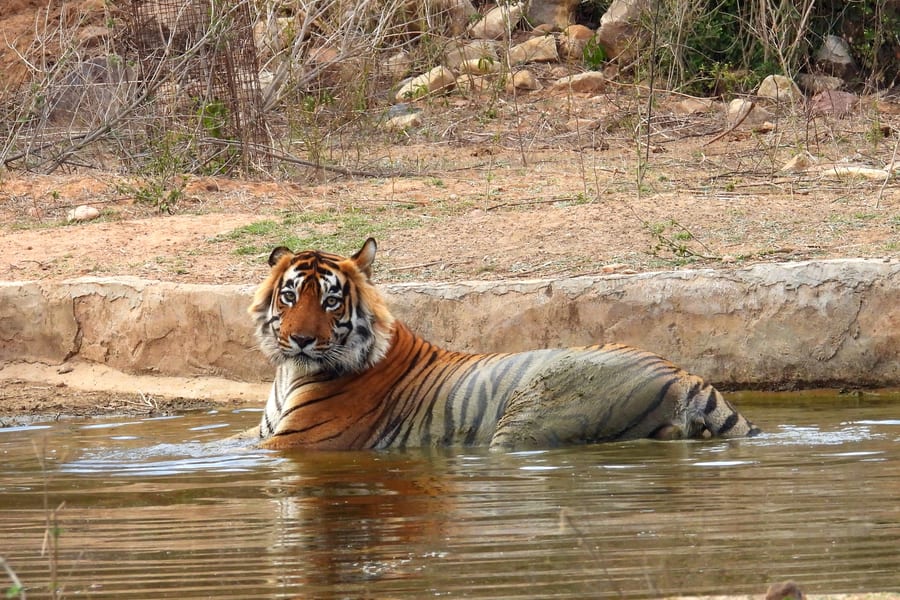
A tiger cooling in a shallow forest waterbody

Best Time for Tigers

For wildlife enthusiasts and photographers, the best time to spot tigers is during the summer months, March to June, when the tigers frequent water bodies to quench their thirst. The dry landscape enhances visibility, making it easier to observe them in their natural habitat.

Best MonthsMarch – June
Best ZonesSariska & Tehla
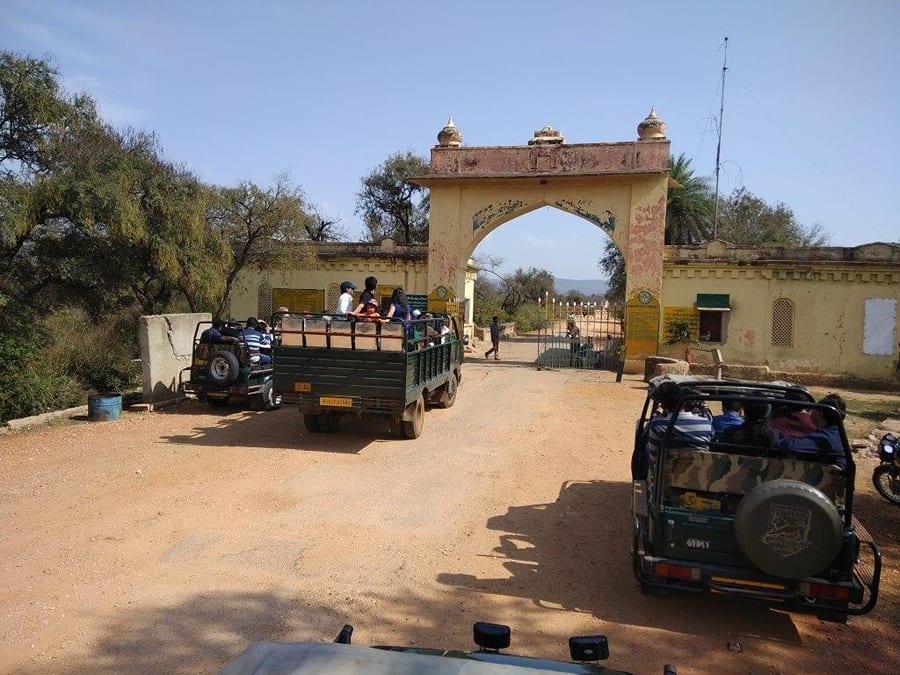
Safari jeeps lined up at the arched Tehla Gate of Sariska Tiger Reserve

Gates & Timings

The reserve is open for visitors for 3 hours after sunrise and 3 hours before sunset, with timings varying between summer and winter. Safaris can be accessed via 2 gates: Gate 1, the Sariska gate, and Gate 2, the Tehla gate, ~7 kilometres from our camp.

Winter6:30–9:30 am · 2:30–5:30 pm
Summer6:00–9:00 am · 2:00–5:00 pm
A registered gypsy jeep waiting on a forest track

Getting Around

Registered jeeps, also known as ‘gypsies’, which carry 6 individuals, are the only mode of accessing the tiger reserve. Because safari slots are limited, booking well ahead is strongly advised.

PricingSubject to season and availability

Note: the Sariska Tiger Reserve safari remains closed every Wednesday, and through July, August, and September each year during the monsoon season. Visitors are asked to maintain silence, refrain from littering, and respect the park’s ecosystem.

Continue

Go Deeper