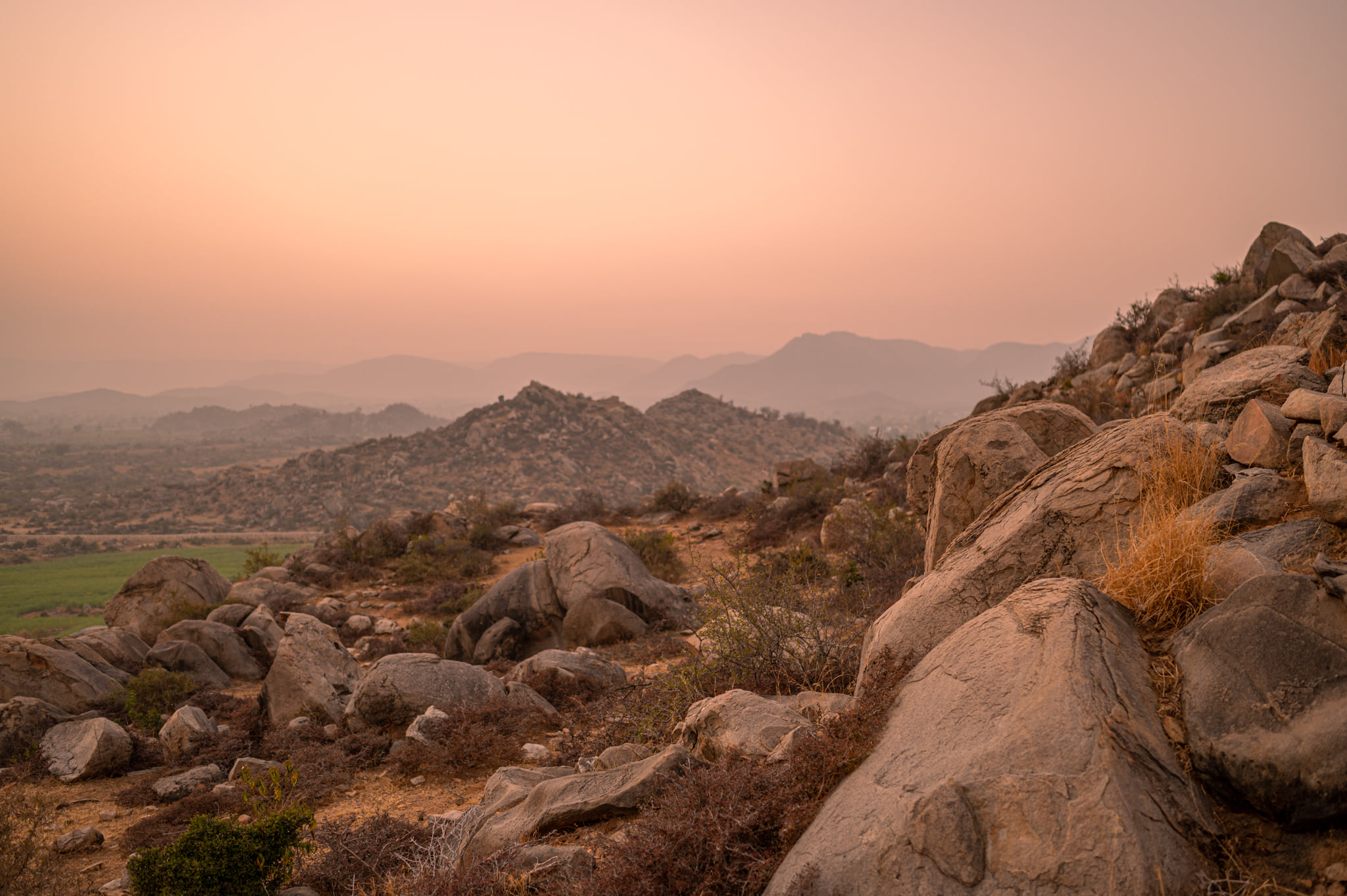
Every ridge inside Sariska belongs to the Aravalli range, one of the oldest fold mountain systems on Earth.
The Aravalli hills Sariska sits inside are the opposite of the Himalayas: where that range is young and still rising, these are ancient, worn down, and largely finished with the business of growing.
Deep Time
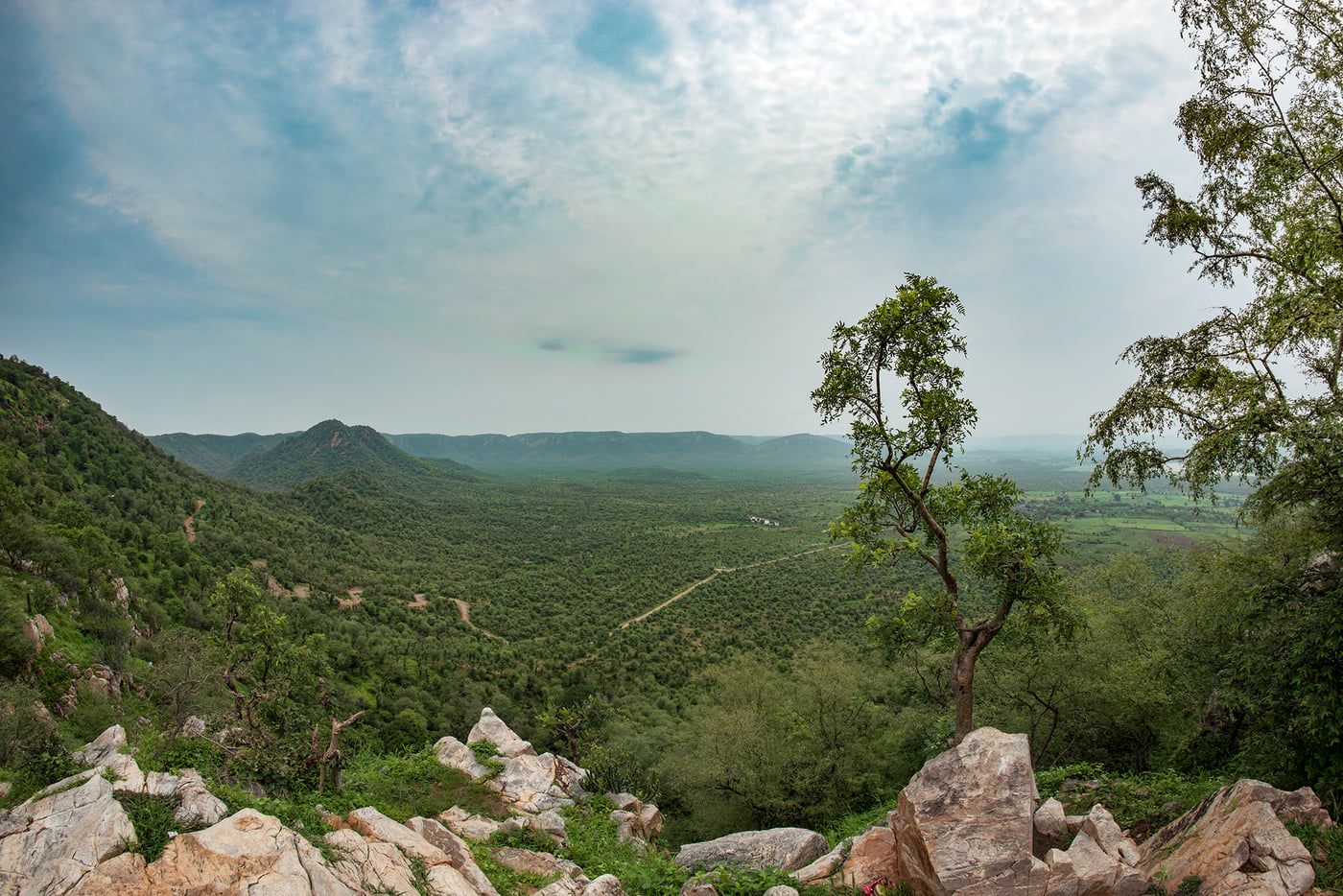
The rock beneath Sariska formed long before the Himalayas existed, in an era when the Indian landmass sat in an entirely different place on the planet. What now reads as a modest range of hills was once far taller, reduced over an immense stretch of geological time to the rounded quartzite ridges visible today.
Standing on one of these ridges is, in a real sense, standing on the exposed skeleton of a much larger mountain.
Older Still
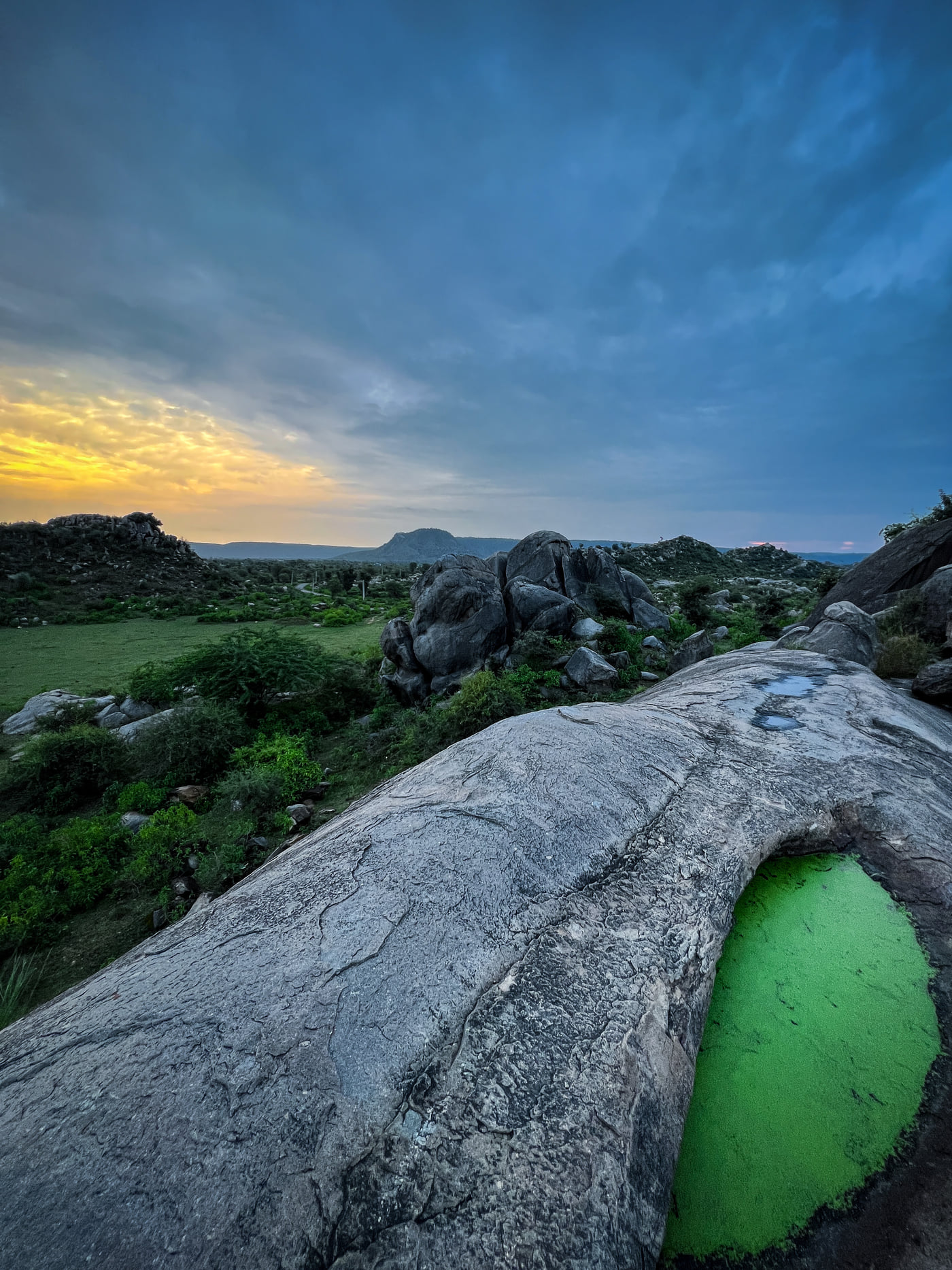
Not all of Sariska’s stone tells the same story. Alongside the sedimentary and metamorphic rock that makes up most of the Aravallis, pockets of granite and quartz appear through the hills, formed from ancient volcanic and igneous activity and, in places, older even than the range that now holds them.
These boulder fields, concentrated in particular around Tehla, are erosion-resistant enough to have outlasted the softer rock around them, forming a landscape of narrow passages and hidden crevices that reads less like a hillside and more like a maze cut from stone.
Written in Stone
The characteristic hog-back ridges that define Sariska’s skyline are made largely of quartzite conglomerate, hard enough to resist the erosion that wore away everything softer around it. This is why the terrain feels less like rolling hills and more like a series of long stone spines, each one a survivor of everything that has weathered off it over the intervening ages.
Sariska’s biodiversity did not appear on a blank landscape. It settled into terrain that had already been stable for an extraordinary length of time, giving successive ecosystems the conditions to establish, collapse, and re-establish long before the forest visitors see today ever took shape. The wildlife is recent by comparison. The ground beneath it is not.
_ecbc8f8a.png)