Sariska does not hold still through the year. Come back in another season and the forest you remember will have rearranged itself.
Visit in different seasons and the same reserve can feel like entirely different forests, each with its own light, its own sounds, and its own rhythm of sightings.
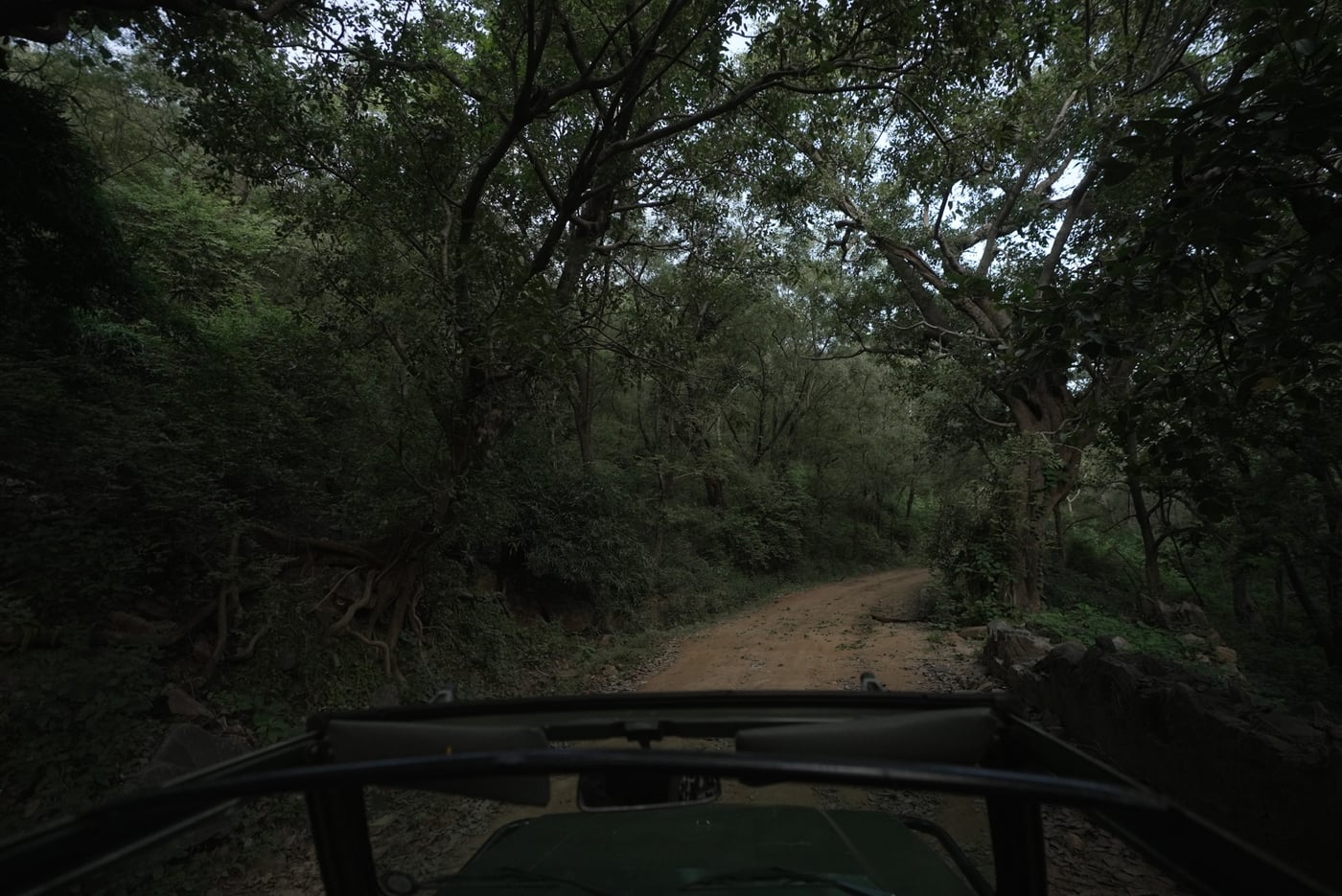
November–February
From November through February, Sariska is at its most comfortable and its most legible. Mornings are cool enough for a blanket on the jeep, the light stays soft well past sunrise, and the deciduous canopy has thinned enough to open long sightlines across the hills.
This is the season most visitors picture when they imagine Sariska, and for good reason.
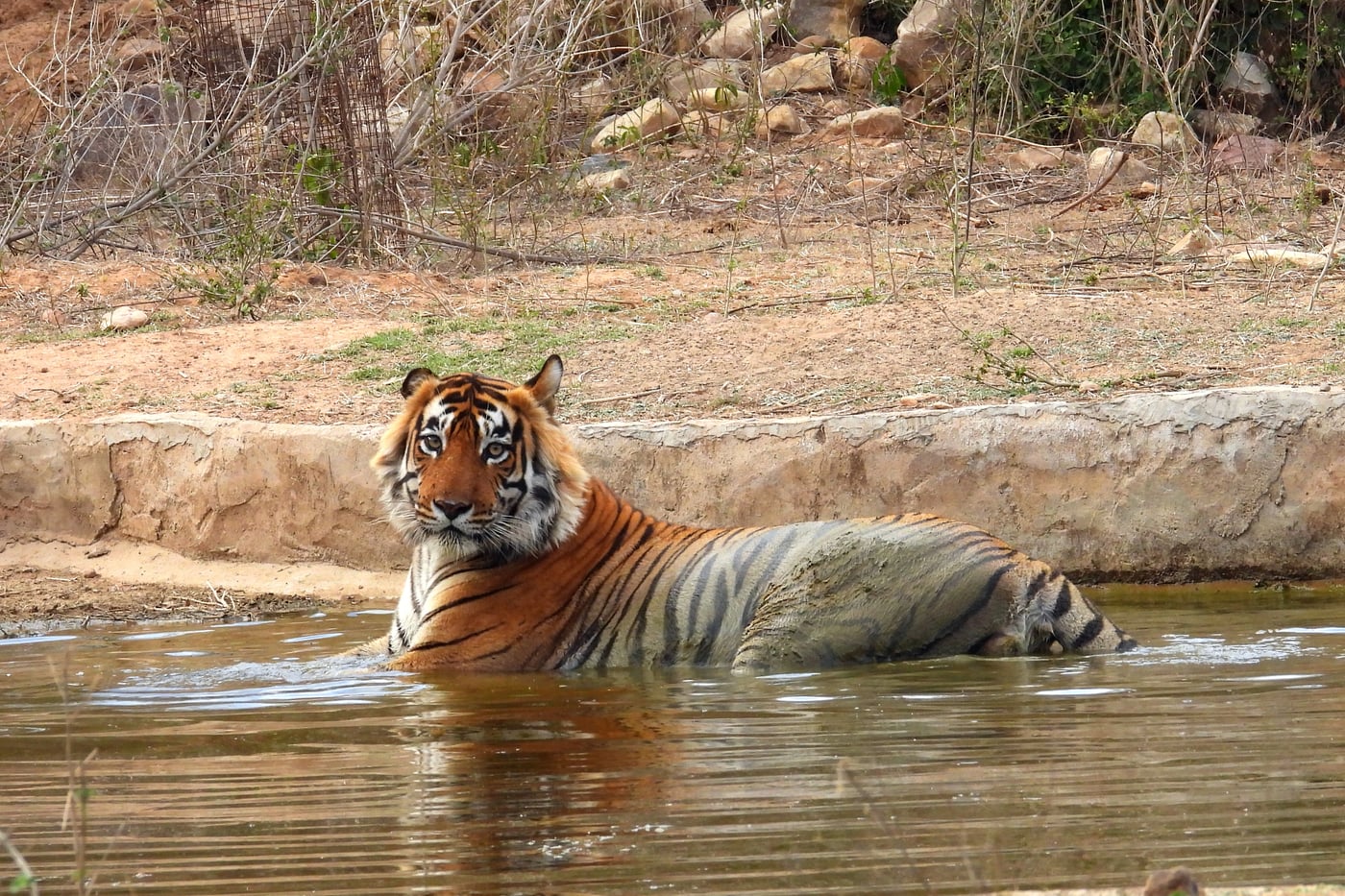
March–June
March through June brings real heat to the Aravallis, but it also brings the forest’s most reliable tiger sightings. Waterholes shrink and concentrate, drawing tigers, leopards, and prey species to the same handful of clearings at predictable hours.
Visitors willing to trade comfort for odds tend to see the most here.
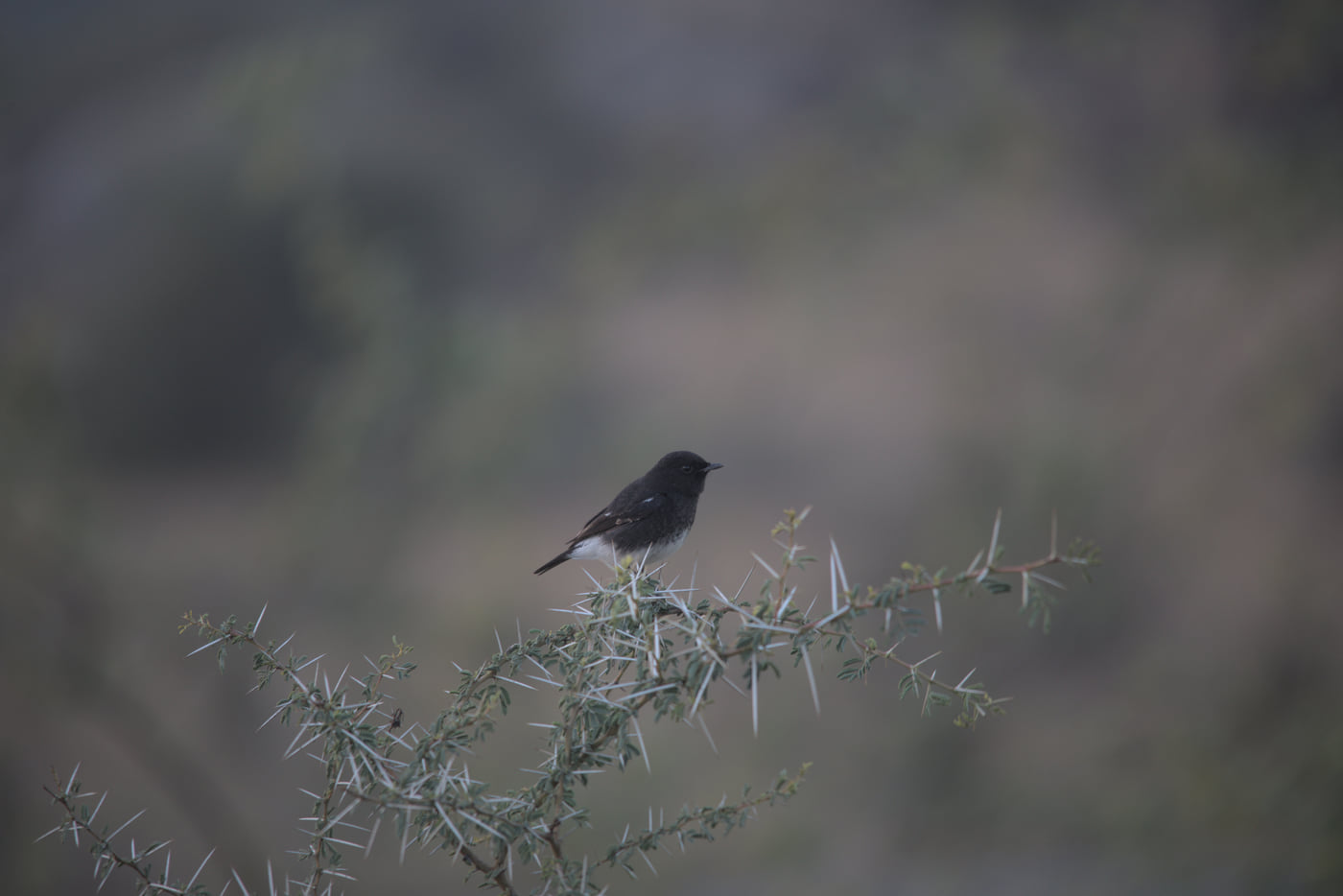
July–September
Through the monsoon months, the core zones close entirely and the forest is left to itself. What emerges afterward, when the reserve reopens each October, is transformed: dry parchment-coloured terrain turns dense and green within weeks, undergrowth thickens, and waterholes fill across the landscape, resetting the forest for the season ahead.
Between Seasons
Between seasons, particularly as the dry months set in, Sariska’s dhok trees, which make up roughly 60% of the forest cover, shed their leaves in a slow wave across the hills.
The forest floor turns the colour of old parchment and the tree line opens in a way it holds for only a few months a year; a transitional look most visitors never plan their trip around, but few forget once they have seen it.
The reserve changes character through the year, and so does the packing. What follows is what we tell guests to put in a bag, season by season, along with what the camp itself does to meet the weather.
Temperatures climb above 45°C at the height of the season. Rooms are air-conditioned, so the heat stays a daytime consideration rather than a night-time one.
The rains refresh the land, and they also invite bugs, mosquitoes, and lizards indoors. Keeping doors and windows shut is the simplest defence. Switching off lights you are not using helps too, since bugs are drawn to them, and it is worth going easy on perfumes and scents.
Nights drop to around 5°C, and every room is fitted with a heater. Days are made for nature walks; evenings run to fire pits, bonfires, and barbecues.
The camp sits ~7 kilometres from Tehla Gate, the reserve’s quieter second entrance. Safari hours move with the season:
| Period | Morning | Evening |
|---|---|---|
| 1 April – 15 May | 6:00 a.m. – 9:30 a.m. | 3:00 p.m. – 6:00 p.m. |
| 16 May – 30 June | 6:00 a.m. – 9:30 a.m. | 3:30 p.m. – 7:00 p.m. |
| 1 October – 31 October | 6:00 a.m. – 10:00 a.m. | 2:30 p.m. – 7:00 p.m. |
| 1 November – 31 January | 7:00 a.m. – 10:00 a.m. | 2:00 p.m. – 5:30 p.m. |
| 1 February – 31 March | 6:00 a.m. – 10:00 a.m. | 2:30 p.m. – 6:00 p.m. |
The safari is closed through July, August, and September for the monsoon, and closed every Wednesday through the rest of the year.