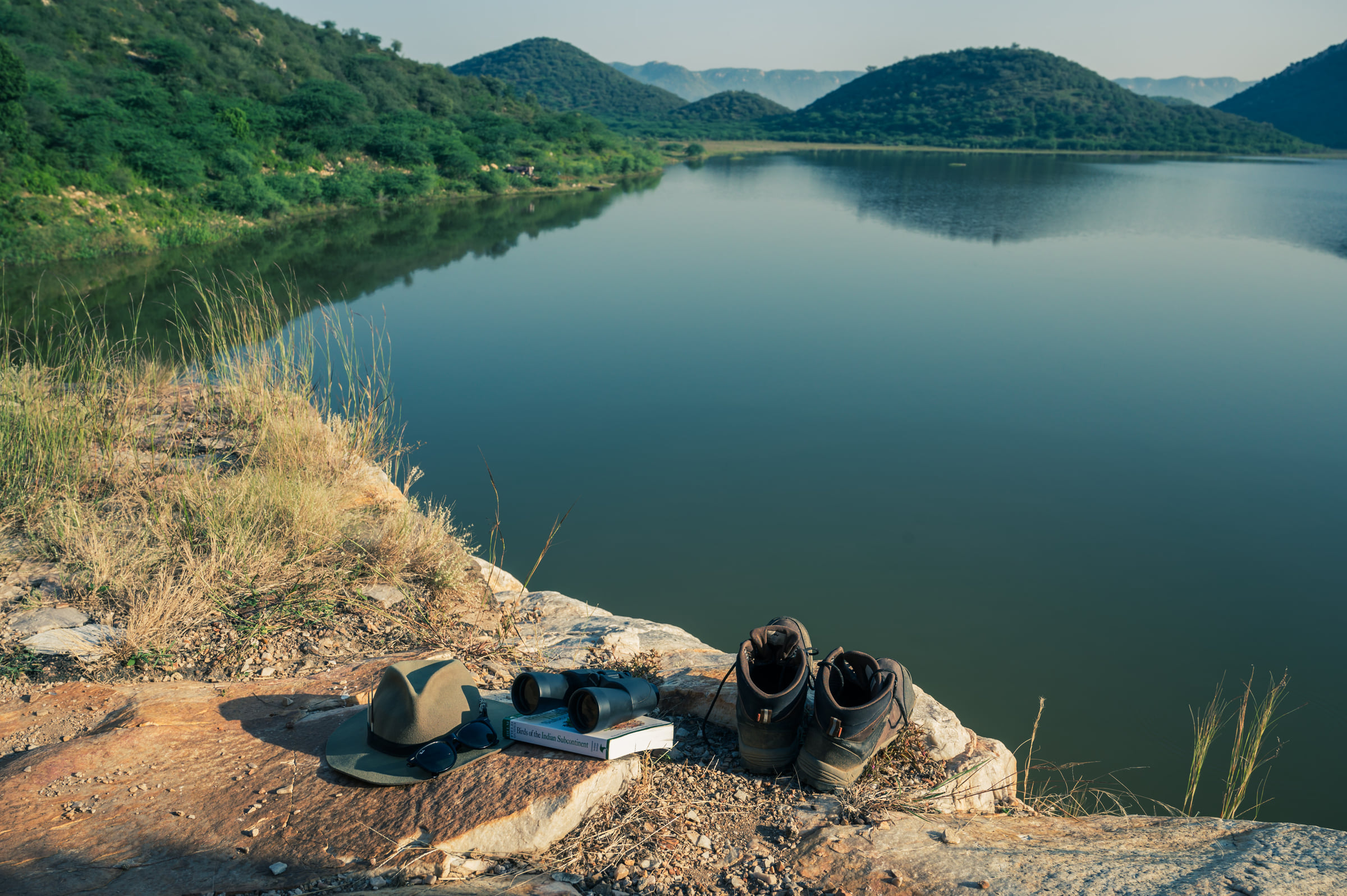
3 bodies of water hold this side of the reserve together through the dry months: a working reservoir, one of the reserve’s 3 large lakes, and a village tank likely as old as the Neelkanth temple town itself.
~13 km From Camp
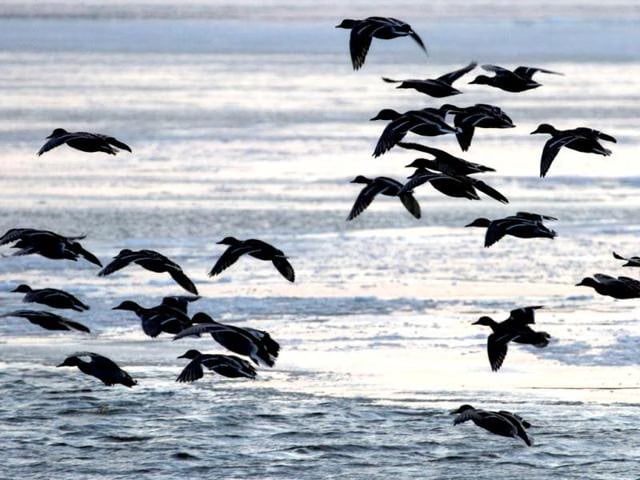
~13 km from camp, Mallana is a working reservoir rather than a scenic stop, built for irrigation, not for visitors, which is part of why it stays largely empty of both.
Water birds gather here through the cooler months in numbers that would draw a crowd anywhere else in Rajasthan. Here, they mostly go unwatched.
~10 km From Camp
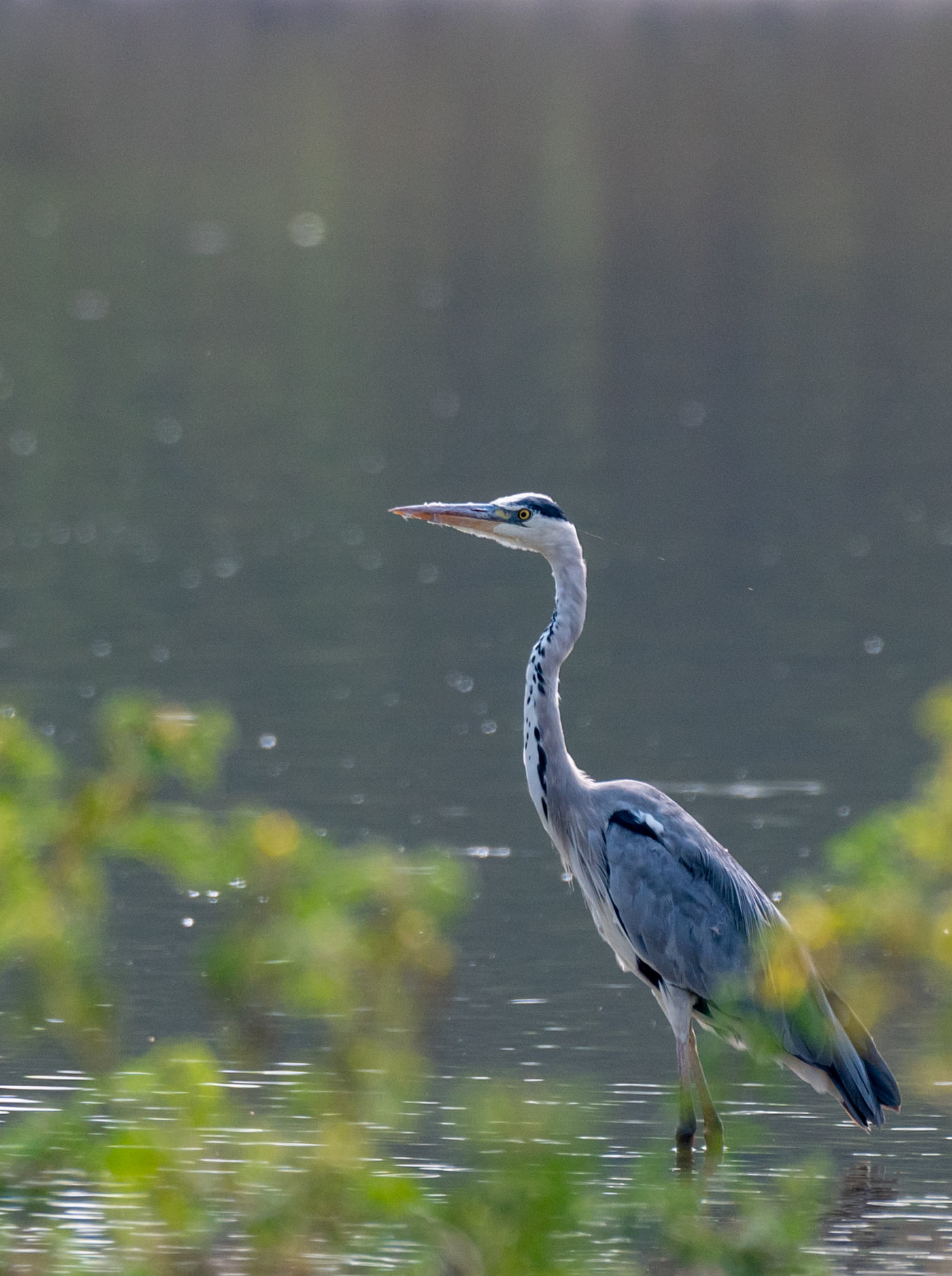
~10 km out, Mansarovar, known locally as Mangalsar, is one of only 3 large lakes inside the reserve itself.
From mid-October, when Sariska’s migratory season properly begins, herons and storks start arriving in numbers, and the lake becomes one of the more productive places in the area to simply sit still with binoculars.
The Old Tank
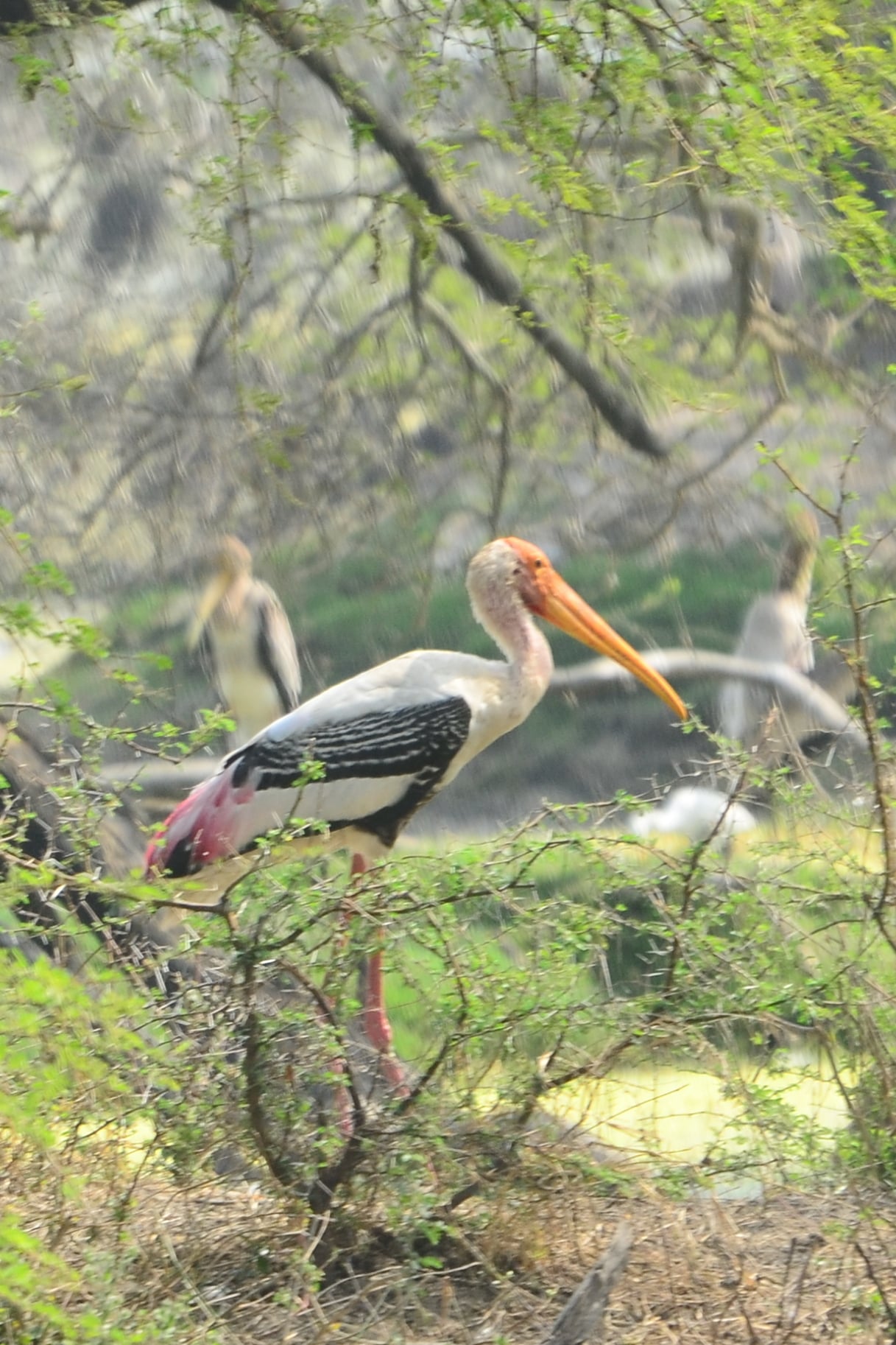
The third of Tehla’s waters isn’t a reserve lake at all but a tank: older than it looks and, by most local accounts, roughly as old as the Neelkanth Mahadev complex itself.
Water storage of exactly this kind, tanks and stepped wells, was part of how that temple town sustained itself centuries ago, and Talab is very likely a working survivor of that same era rather than a later addition to the landscape.
The Temple It Once ServedThe Shape It Draws
Mark all 3 (Mallana, Mansarovar, and Talab) on a map and they form a rough triangle around Tehla, and that triangle is, in practice, where the wildlife is. Predators follow prey. Prey follows water.
A drive out to any one of the 3 isn’t a detour from a stay in Tehla so much as an extension of the same reason you came.
_ecbc8f8a.png)