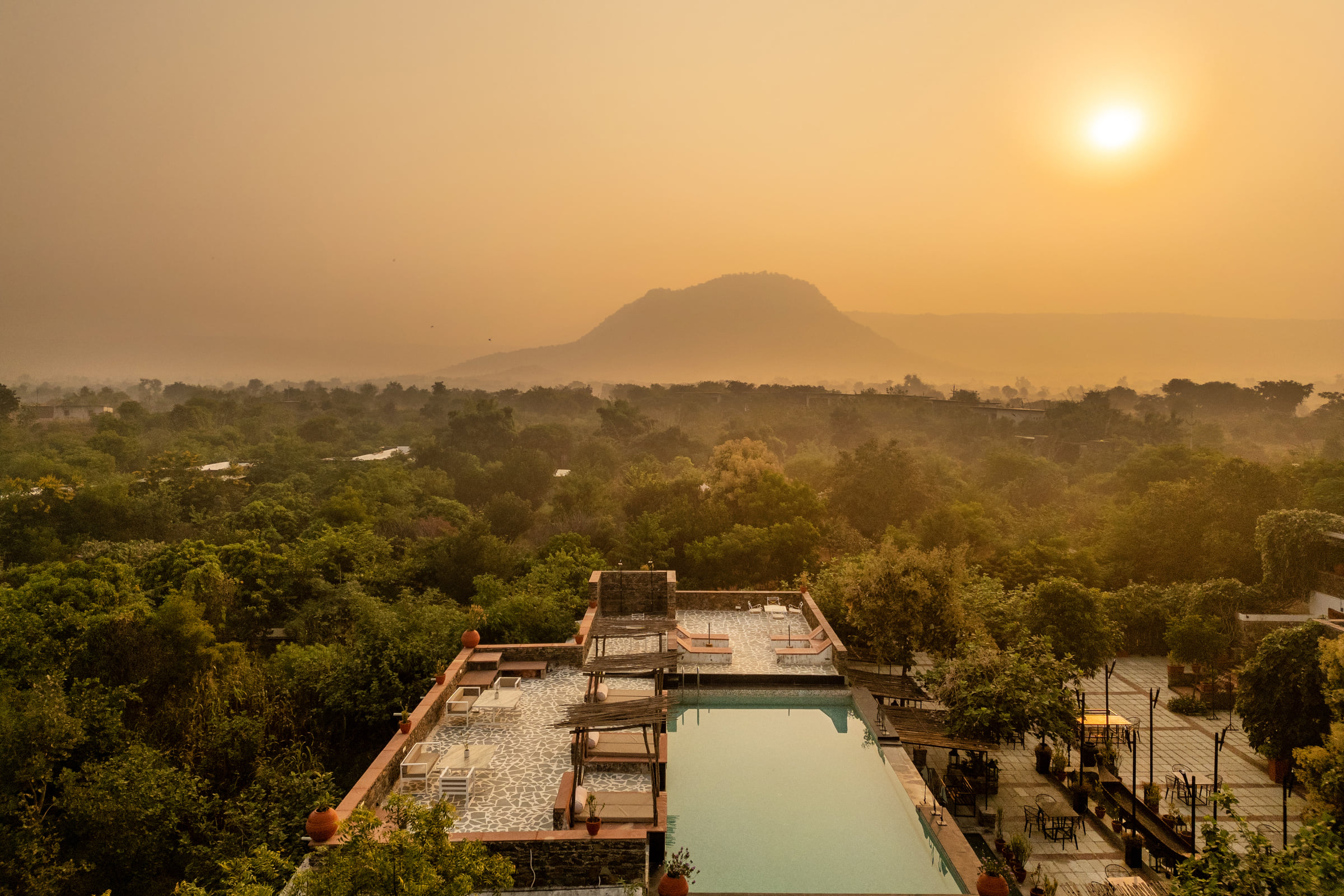
The choice to build here, before anyone else would, still shapes everything the camp does today.
The Conviction
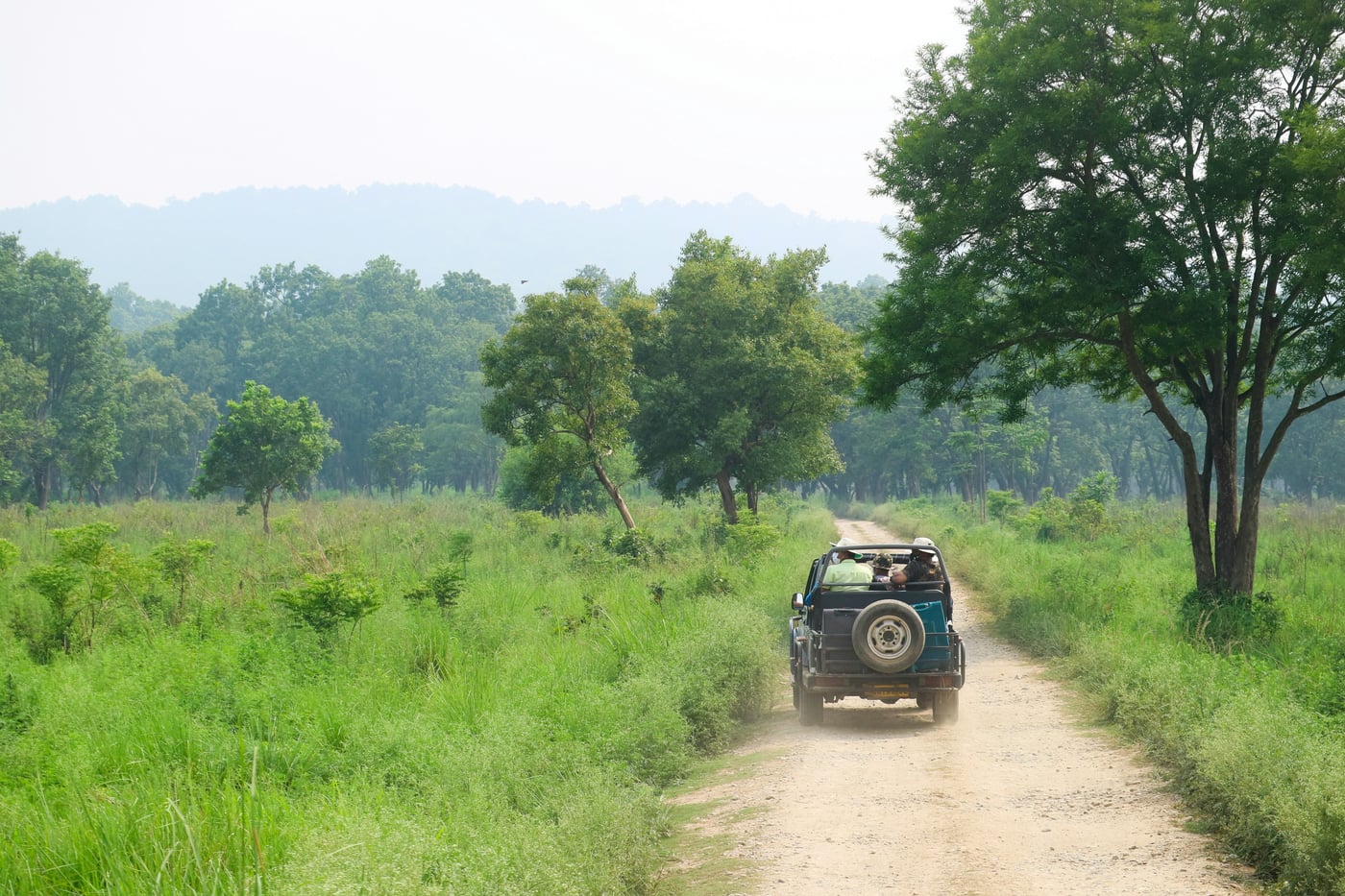
Most properties near a tiger reserve build around a single experience: a jeep, a driver, a checklist of animals to spot. Utsav was built around something larger, the conviction that a stay here should open up the whole of what Tehla actually is: core forest and buffer land, boulders older than the hills, a temple town most of India has never heard of, water that draws migratory birds every winter.
That determination to offer a genuinely holistic wildlife experience, not a narrow one, sits behind every decision the camp has made since it opened.
The Team
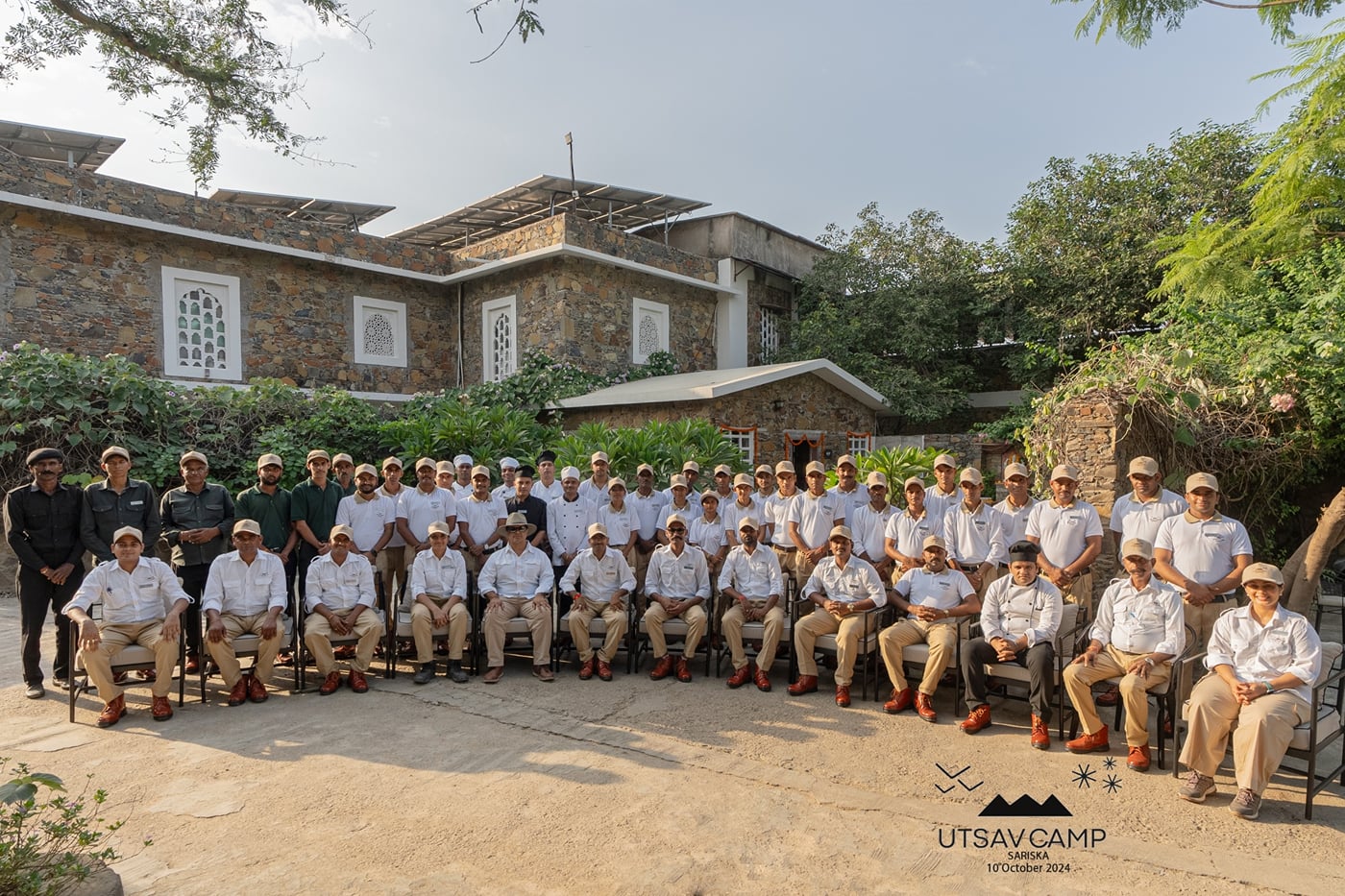
Every safari, wildlife track, and boulder walk at Utsav runs through a dedicated naturalist, not a rotating pool of drivers reciting a script. The team is among the largest attached to any single camp in Rajasthan, assembled deliberately rather than grown by accident.
A naturalist who knows this stretch of forest (its leopards, rock art, and water bodies) changes what a guest actually understands.
The Habit
Solar-heated water, minimal air conditioning, no in-room WiFi, or television, none of it was adopted to satisfy a certifying body. The camp has run this way since it opened.
Sustainability was never a seasonal initiative or a line in a brochure here; it’s closer to how a kitchen has its own way of doing things, or a stable has its own way of caring for its horses, a habit built into the operation rather than announced by it.
The Stake
Sariska has spent years overlooked next to Ranthambore and Corbett on India’s wildlife tourism map, despite a tiger population that has climbed back from zero and a side of the reserve most visitors still don’t know exists.
Utsav’s work (through the camp, through the Sampat Wildlife Foundation, through the naturalists it trains) is built around changing that: putting Sariska back where its wildlife, its history, and its rock art say it belongs.
18 rooms across 7 hectares of land, a naturalist team sized to deliver a holistic experience rather than a rushed one, and an ongoing commitment to conservation work all cost more to sustain than a property built purely to fill rooms. The rate reflects a mission, not a margin, and a pioneer’s stake in a region still being put back on the map.
_ecbc8f8a.png)