Founded in the late 16th century and developed through the early 17th century and abandoned within decades of its completion, Bhangarh Fort, Alwar, is one of the most compelling destinations in Rajasthan, drawing history enthusiasts, architecture lovers, and curious travellers in equal measure. The Archaeological Survey of India (ASI) prohibits entry after sunset, a rule that has contributed to its reputation as one of the most discussed haunted sites in India. Set against the Aravalli hills within the Sariska Tiger Reserve buffer zone, the fort's crumbling temples, palace ruins, and dramatic silhouette against an open sky make it worth every km of the drive.
This guide covers everything you need before you visit: the history, the legends, what to see, timings, the best season to go, and how to get there from Alwar, Jaipur, and Sariska.
Bhangarh Fort, Rajasthan: A Fortress Steeped in Myth
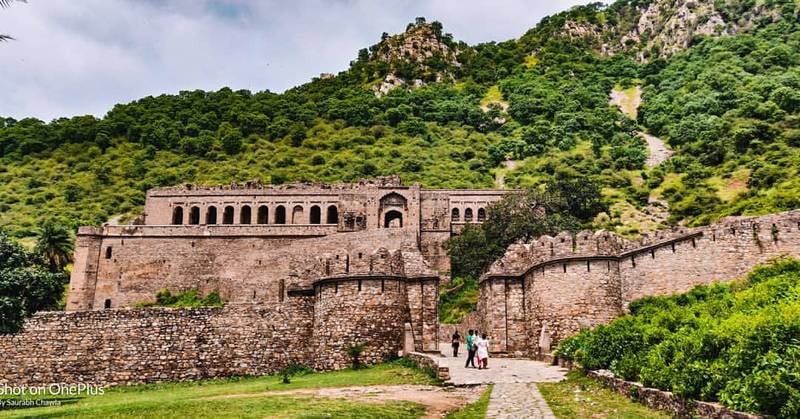
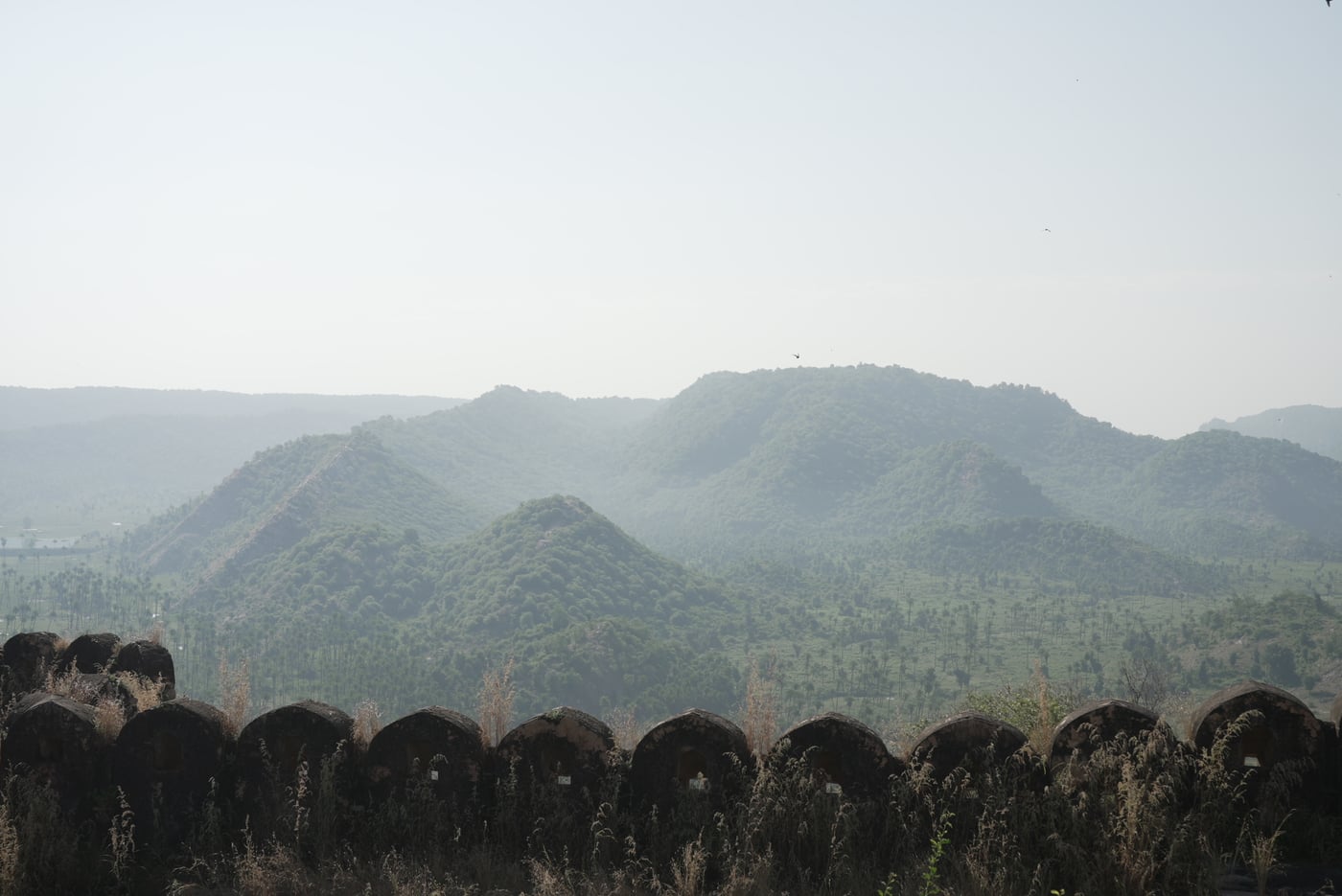
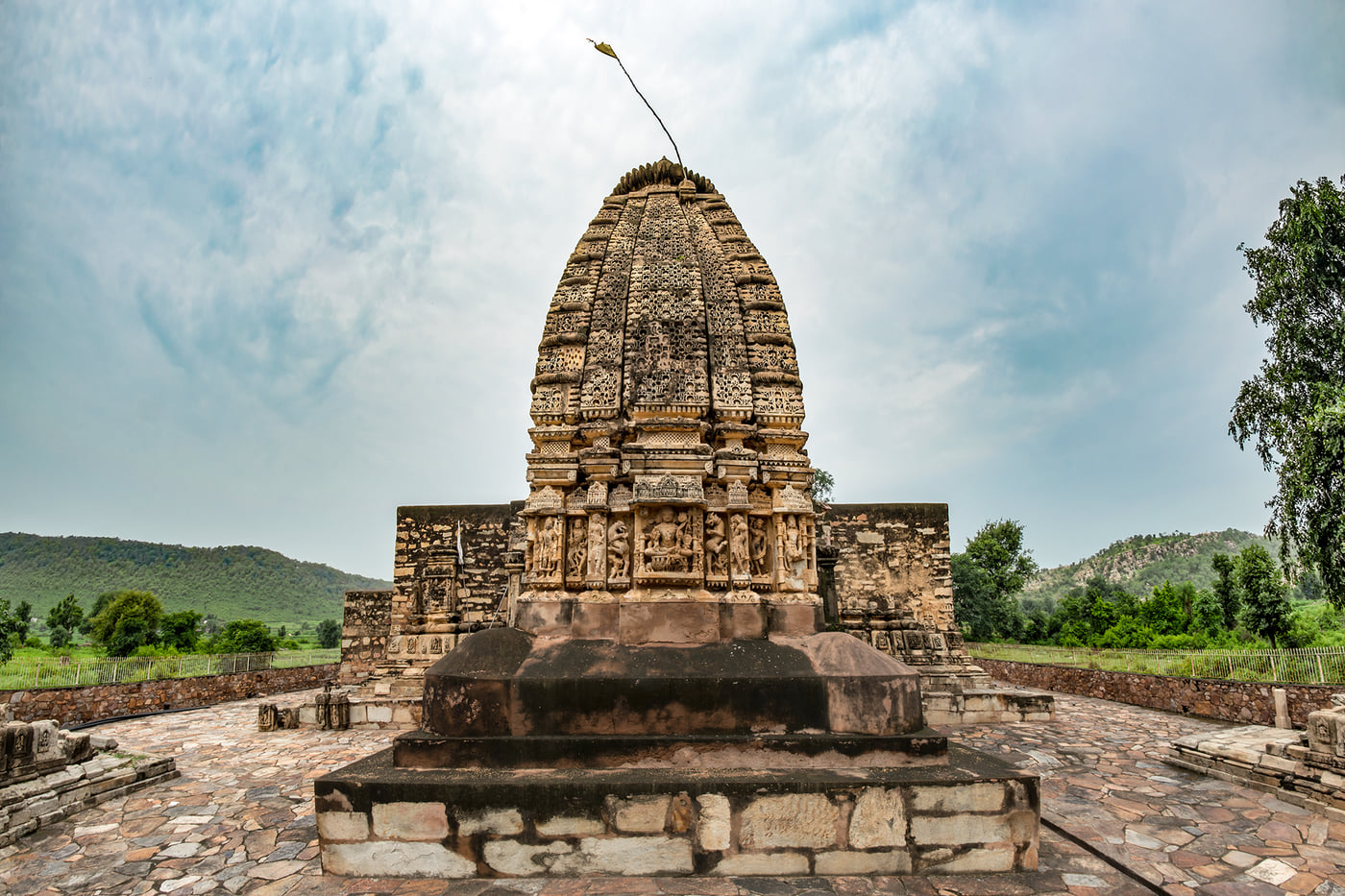
Bhangarh Fort, Rajasthan, sits at an elevation in the Alwar district, tucked inside a valley where the Aravallis form a natural wall on 3 sides. The fort complex is vast, spreading across several hectares, and includes temples, markets, gateways, and palace structures arranged across terraced levels. What makes it unusual among Rajasthan's many historic forts is its state of complete abandonment. No one has lived within its walls since the 17th century, and the government prohibits entry after sunset, a rule that, combined with the fort's eerie stillness, has cemented its reputation as one of India's most discussed haunted sites.
Despite the folklore, Bhangarh Fort, Rajasthan, is first and foremost a work of Mughal-influenced Rajput architecture. The layout is deliberate and grand, the stonework intricate, and the scale of the original settlement impressive. Visitors who arrive purely for the ghost stories often leave as students of history.
Bhangarh Fort History: Construction, Rulers, and Abandonment
Bhangarh Fort’s history dates back to the late 16th century, when Man Singh I, a general in Akbar’s court, established the settlement. The region later came under the rule of Madho Singh I, under whom it developed into a fortified township with temples, markets, and a thriving population.
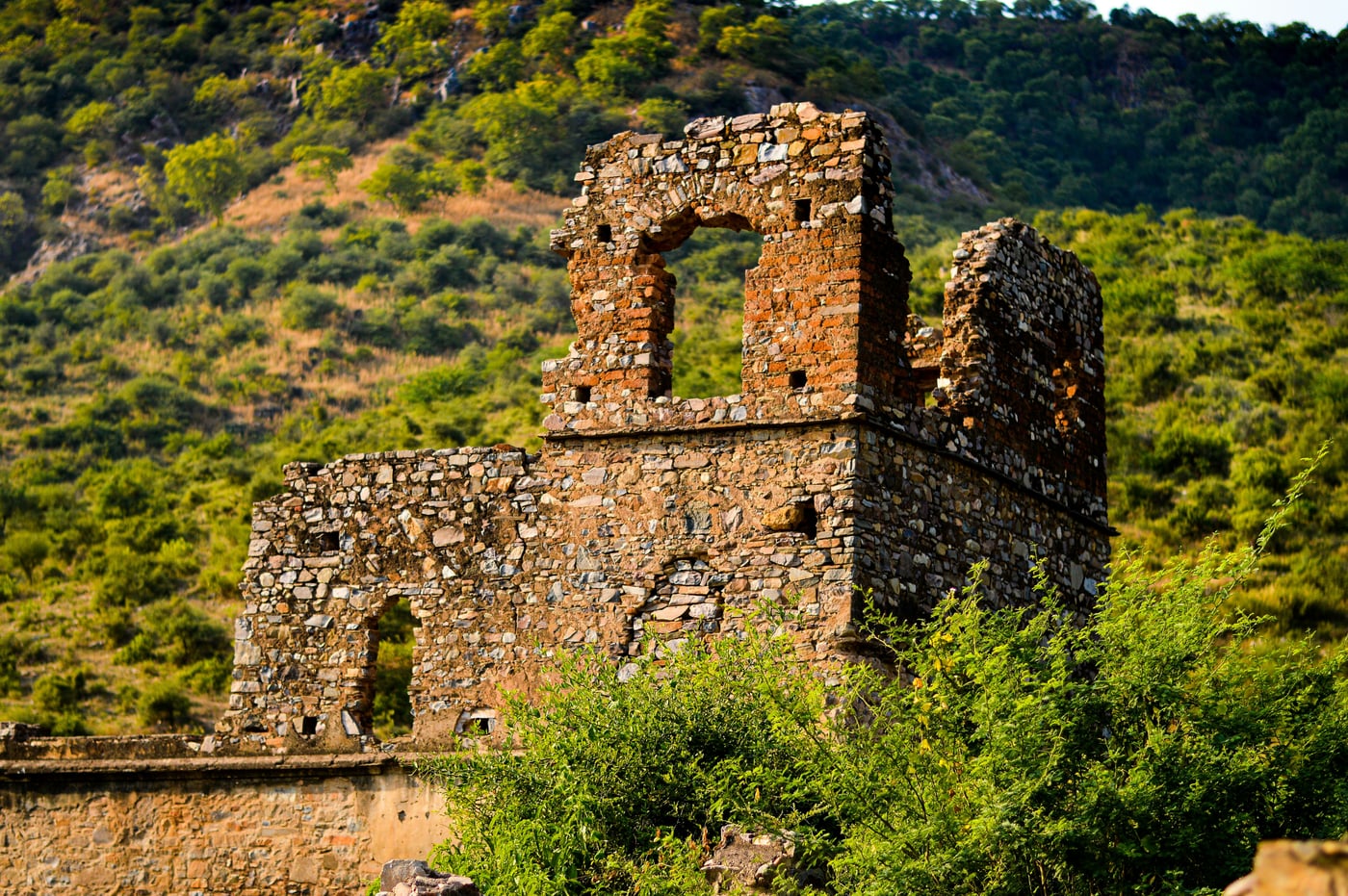
The settlement's decline came swiftly after Chhatr Singh's death in 1630. With no strong successor to defend the territory, Bhangarh gradually emptied. A severe famine in the region during the late 17th century accelerated the exodus. By the time the Marathas took control of the area in the 18th century, the town was already a ruin. The Bhangarh Fort history is therefore not one of conquest or siege but of gradual desertion, which accounts for the unusual completeness of the structures that remain.
The Legend Behind the Ruins
2 legends are most commonly associated with Bhangarh's abandonment. The first involves a sage named Baba Balak Nath, who permitted the town to be built on his land on a condition: no building could cast a shadow over his meditation retreat. When a later ruler violated this by constructing a taller palace, the sage cursed the entire settlement to ruin without possibility of rebirth for its residents.
The second, more widely told legend centres on a sorcerer named Singhia who fell obsessively in love with Princess Ratnavati of Bhangarh. He enchanted a potion intended for the princess, but she foiled his plan by pouring it on a boulder, which then crushed him. With his dying breath, Singhia cursed the fort and all its people to a fate of death without reincarnation. Whether one takes these stories at face value or treats them as oral history explaining a historical collapse, they are inseparable from any visit to the site.
What to See at Bhangarh Fort
The fort complex rewards those who take time to walk the full extent of its ruins rather than stopping at the main gate. The structures are spread across a long approach road and multiple terraced levels, and each section tells a different part of the settlement's story.
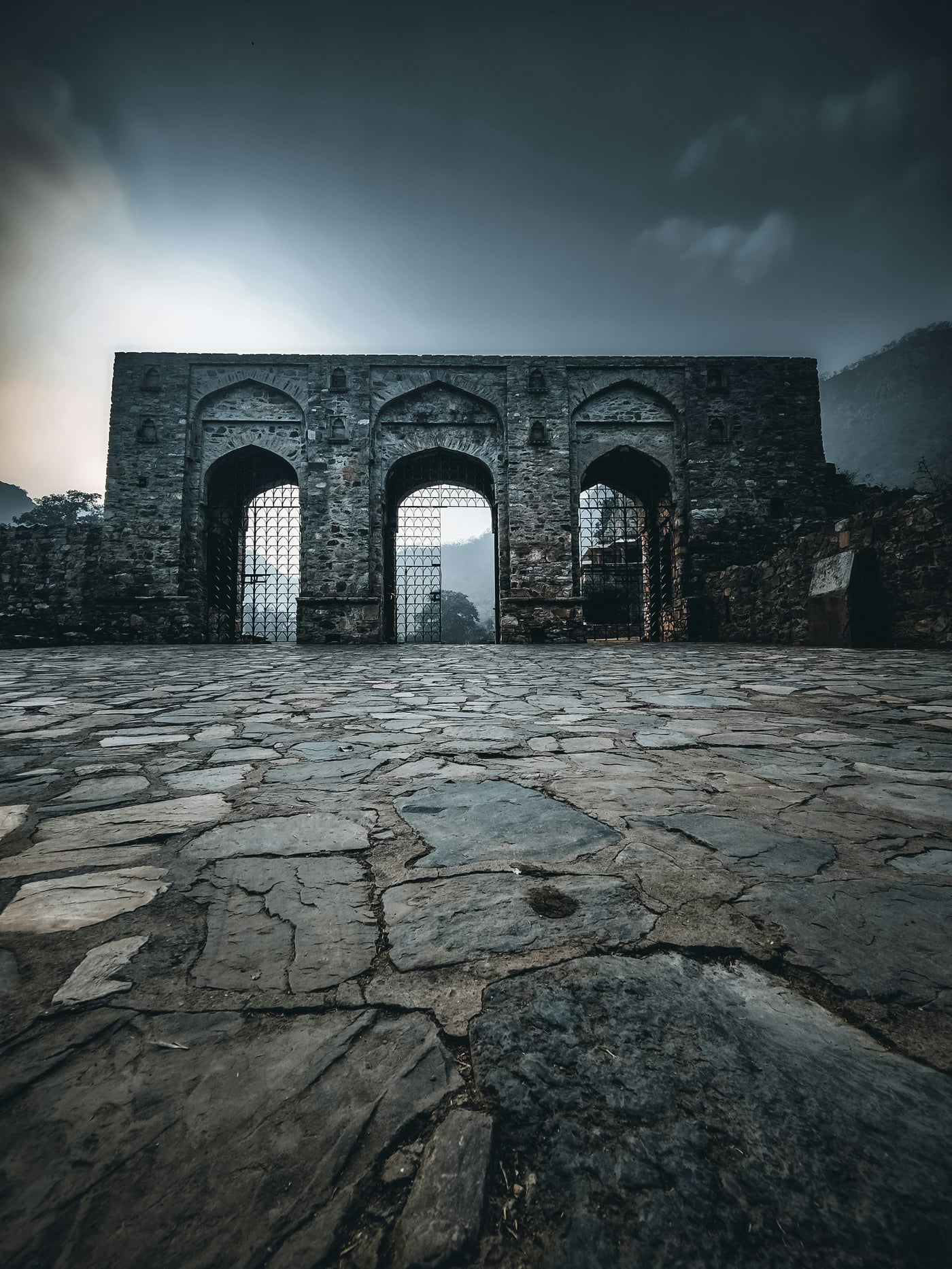
Key Structures Within the Complex
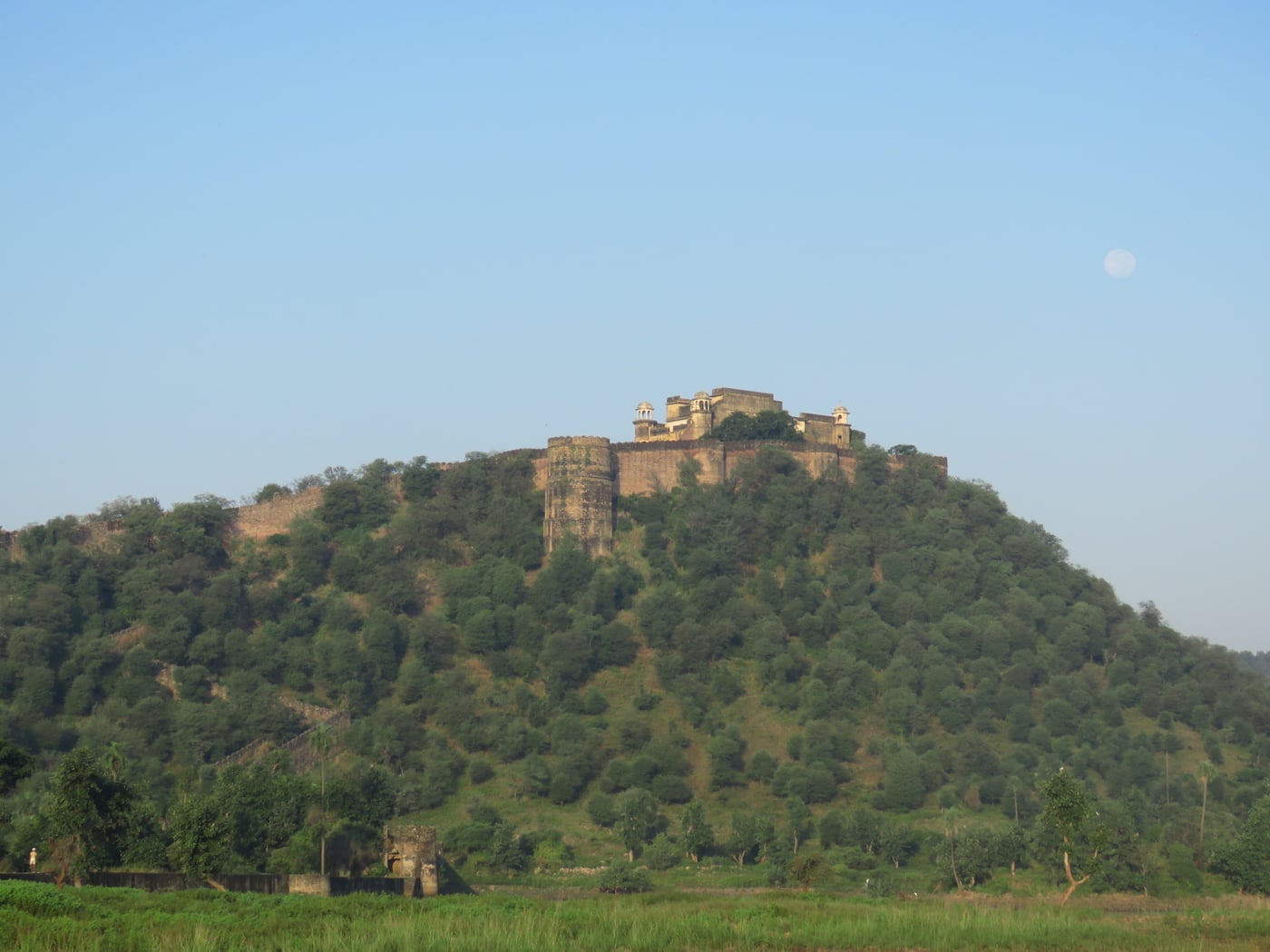
- Gopinath Temple: The first major structure as you enter, this Vishnu temple remains one of the best-preserved in the complex, with detailed carvings on the outer walls and an intact inner sanctum.
- Someshwar Temple: A Shiva temple set beside a natural spring, where flowing water has been present since the fort's founding. The sound of water in an otherwise silent landscape is striking.
- Mangla Devi Temple: Dedicated to Goddess Mangla, this temple sits on the uppermost terrace and offers the clearest views of the surrounding valley and Aravalli ridgeline.
- Bhangarh Market Ruins: The remains of a street-facing market line the approach to the palace, giving a clear sense of how densely populated and commercially active the township once was.
- Palace of Madho Singh: The topmost structure in the complex, the ruined palace sits on a raised platform with arched doorways and carved balconies still partially intact. The views from this level are the best in the fort.
Allow at least 2 hours to explore the complex properly. Comfortable footwear is essential as the terrain involves uneven stone pathways and steep inclines between terrace levels.
Bhangarh Fort Timings and Entry Rules
Visitor Information at a Glance
- Timings: 6:00 AM - 6:00 PM (entry not permitted after sunset)
- Entry Fee: Approximately INR 25 for Indian nationals and INR 200–300 for foreign nationals
- Photography: Permitted within the fort complex during daylight hours
- Night Entry: Strictly prohibited by the ASI; the restriction is enforced by local authorities
- Guided Tours: Local guides are available at the main entrance gate for hire
- Facilities: Basic facilities, including small food stalls, are available near the entrance; no facilities inside the fort
- Managed By: Archaeological Survey of India (ASI)
Best Time to Visit Bhangarh Fort
The best time to visit Bhangarh Fort is between October and March, when temperatures in the Alwar region stay in the range of 10 to 25 °C and the skies are clear. The fort is entirely outdoors with limited shade, so the cooler months make walking through the extensive complex far more comfortable. Early mornings between 6:00 AM and 8:00 AM are particularly good for photography, as the light falls at a low angle across the stone facades, and the fort is quiet before the day-trip crowds arrive from Jaipur.
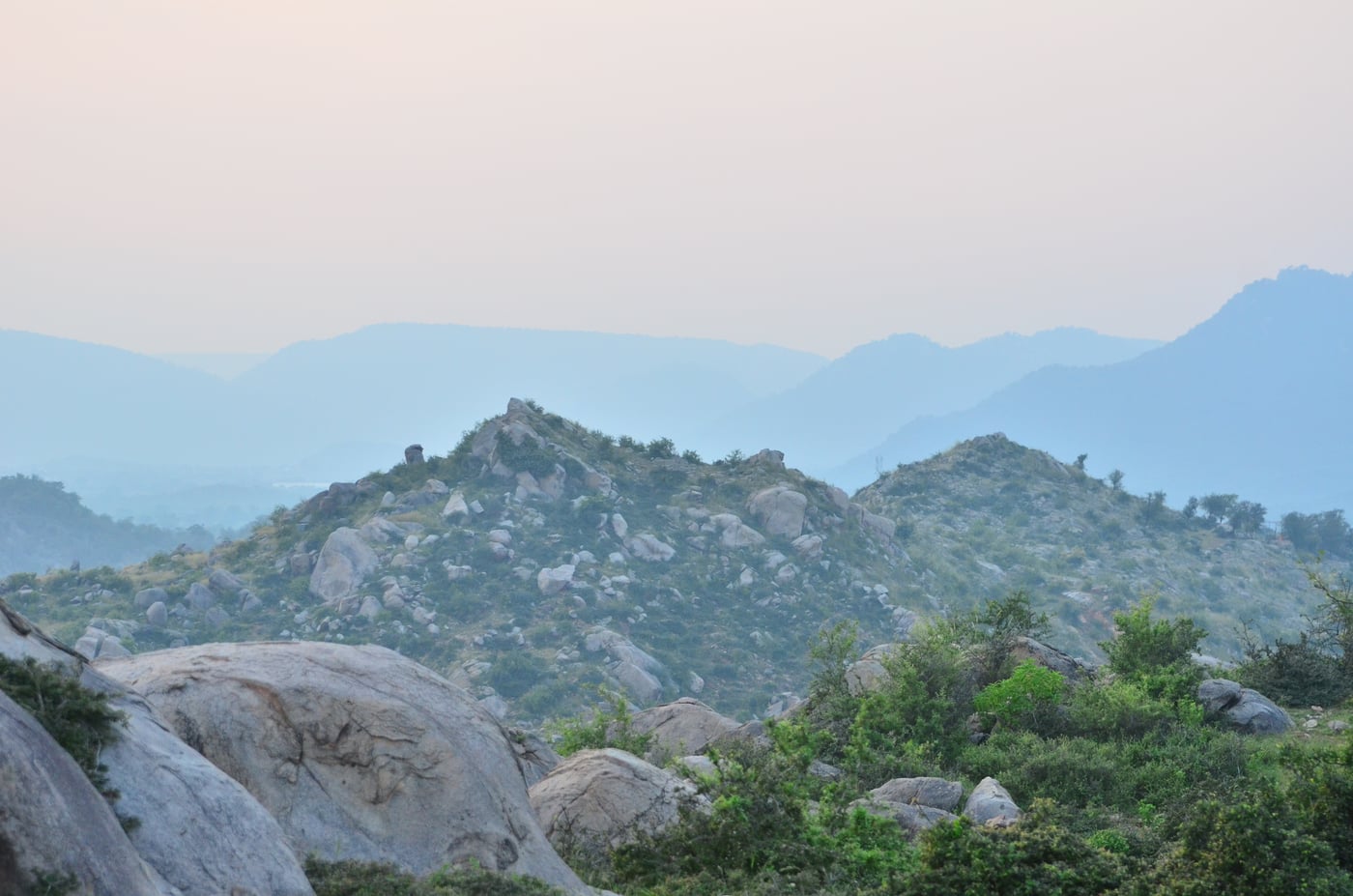
April and May bring intense heat, with temperatures regularly exceeding 40°C, making a long outdoor visit genuinely difficult. The monsoon season (July to September) cools the landscape and turns the surrounding hills green, but uneven stone surfaces become slippery after rain. For travellers combining Bhangarh with a Sariska safari, October to March aligns well, as this is also peak safari season for the Sariska Tiger Reserve.
How to Reach Bhangarh Fort from Alwar, Jaipur, and Sariska
- From Alwar: Bhangarh Fort is ~90 km from Alwar city. The drive via Rajgarh takes around 2 hours on well-maintained state roads. Taxis and private vehicles are the most practical option; public bus services exist but are infrequent and slow.
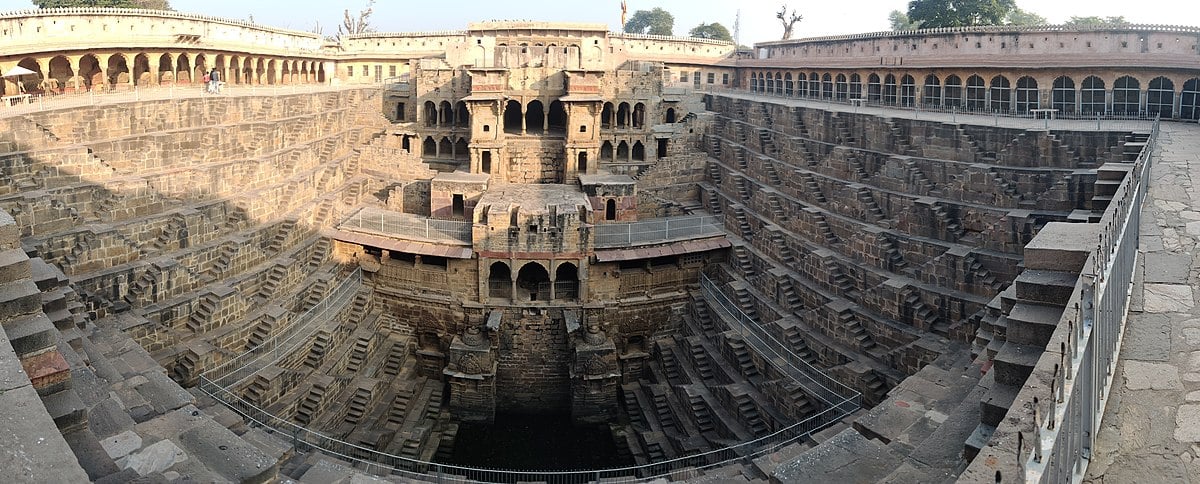
- From Jaipur: The fort is ~85 km from Jaipur, making it a popular day trip from the state capital. The drive via NH 48 and Shahpura takes approximately 2 hours. Many visitors combine Bhangarh with a stop at Abhaneri's Chand Baori stepwell, which lies on the same route.
- From Sariska: Utsav Camp Sariska and the Sariska Tiger Reserve area are ~55-65 km from Bhangarh Fort, a drive of around 1.5 hours via Rajgarh. This makes Sariska an excellent base for those wanting to combine a wildlife safari with a visit to the fort without the longer drive from Jaipur or Delhi.
- From Delhi: Bhangarh Fort is ~280 km from Delhi, a drive of around 4 to 5 hours via NH 48. Most travellers from Delhi make it an overnight or weekend trip, pairing it with Sariska or Alwar.
- Nearest Railway Station: Dausa railway station, ~22 km away, has connections to Jaipur and Delhi. From Dausa, hire a taxi or auto-rickshaw to the fort.
Places to Visit near Bhangarh Fort
The area around Bhangarh rewards travellers who spend more than a single day in the region. Several sites within a ~50 to 60 km radius offer distinct historical, natural, and wildlife experiences that pair well with a fort visit.
Nearby Attractions Worth Planning Around
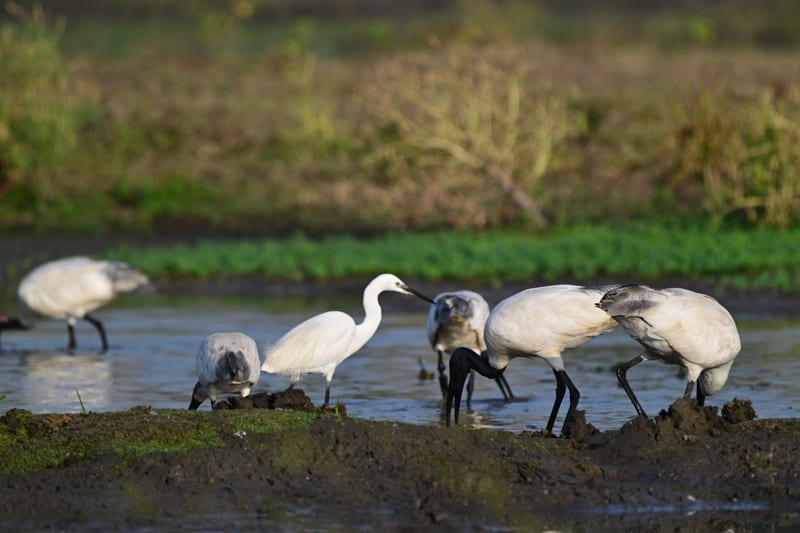
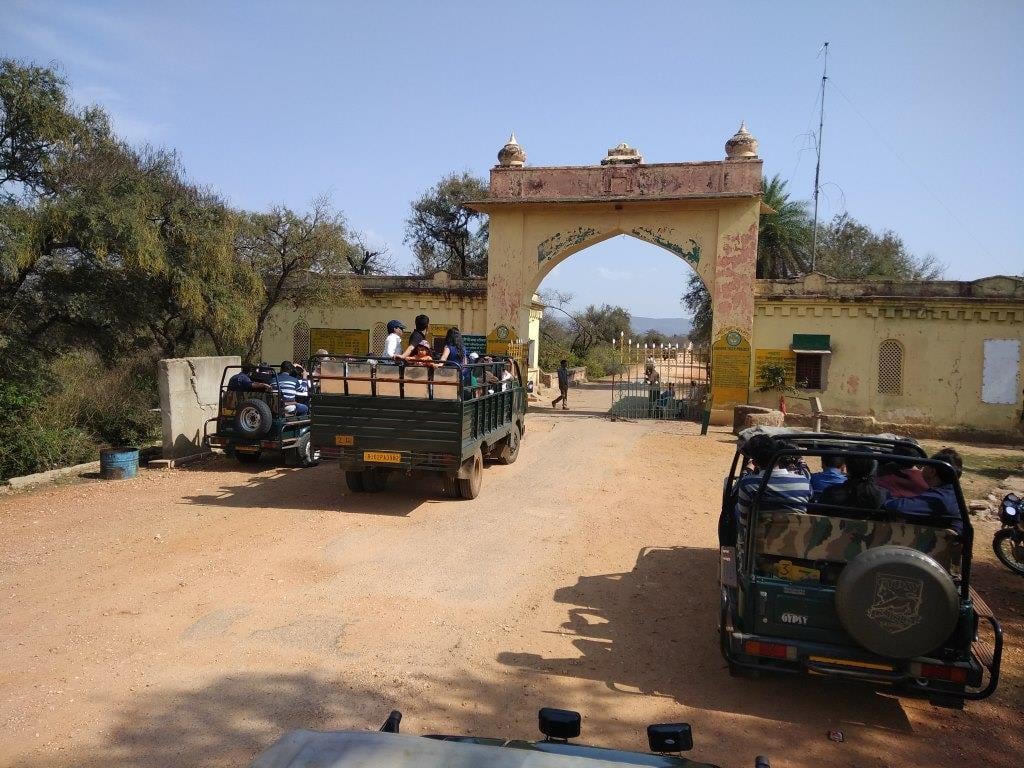
- Sariska Tiger Reserve: Located ~55-65 km from Bhangarh, Sariska is one of Rajasthan's most significant tiger reserves, covering over 800 sq. km. of dry deciduous forest. Beyond tigers, the reserve shelters leopards, hyenas, jackals, and 470+ bird species. Jeep safaris operate from multiple gates during the October-March season.
- Chand Baori, Abhaneri: One of the largest and most intricately designed stepwells in India, Chand Baori dates to the 8th-9th century CE and features 3,500 steps arranged in a precise geometric pattern. It is ~20 km from Bhangarh and a natural pairing on the Jaipur route.
- Ajabgarh Fort: Just a few km from Bhangarh, the lesser-visited Ajabgarh Fort sits on an adjacent hilltop and offers a quieter, more atmospheric alternative for those who enjoy fort exploration without the crowds.
- Neelkanth Temples: Dating to the 6th-10th century CE, the Neelkanth temple complex near Sariska houses a revered Shiva idol and features some well-preserved stone carvings from the early medieval period. The drive through the Sariska forest to reach it is an experience in itself.
- Siliserh Lake: A picturesque reservoir near Alwar surrounded by low hills, Siliserh offers boating and a heritage lakeside palace hotel. It makes a pleasant half-day stop when travelling between Alwar and Bhangarh.
Sariska and Bhangarh Fort: Planning a Combined Trip
The distance between Sariska and Bhangarh Fort, ~55-65 km via Rajgarh, makes a combined itinerary entirely practical over 2 or 3 nights. A typical arrangement works well: arrive at Sariska on Day 1, go on a morning and evening safari on Day 2, then drive to Bhangarh on Day 3 morning before heading onwards to Jaipur or Delhi.
Sariska is often overlooked by travellers who default to Ranthambore, but it offers a markedly different experience. The landscape is drier and more open, the rock formations around Tehla are extraordinary in geological terms, and the density of leopard sightings around the boulder fields gives it a character entirely its own. Bhangarh, at roughly 1.5 hours from Sariska, sits at the right distance to be a compelling excursion rather than a logistical stretch.
Where to Stay near Bhangarh Fort: Utsav Camp Sariska
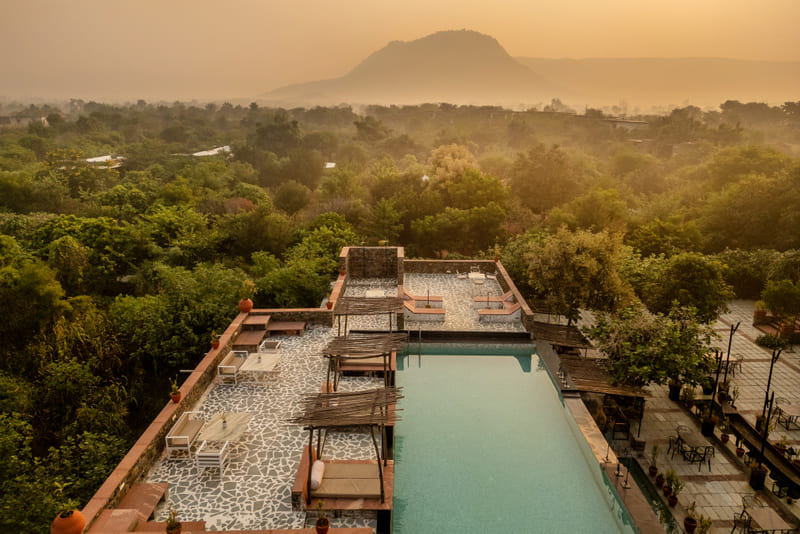
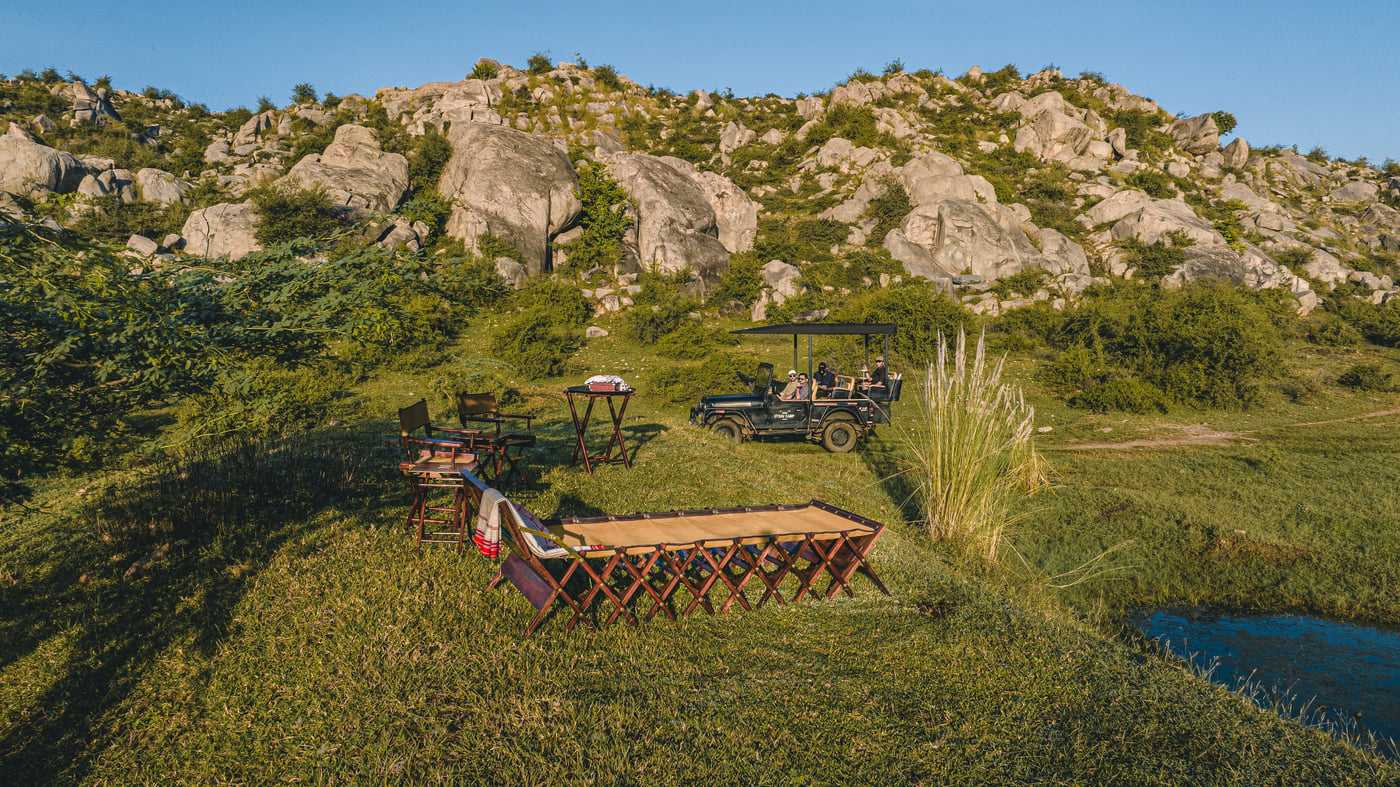
For travellers planning a combined Sariska-Bhangarh itinerary, Utsav Camp Sariska makes a strong case as the most considered base in the region. Situated ~7 km South of Gate No. 2 of Sariska National Park, the camp sits within 7 hectares of land surrounded by ancient Aravalli boulder formations and dry deciduous forest, a setting that puts nature at the centre of the stay rather than at its edges.
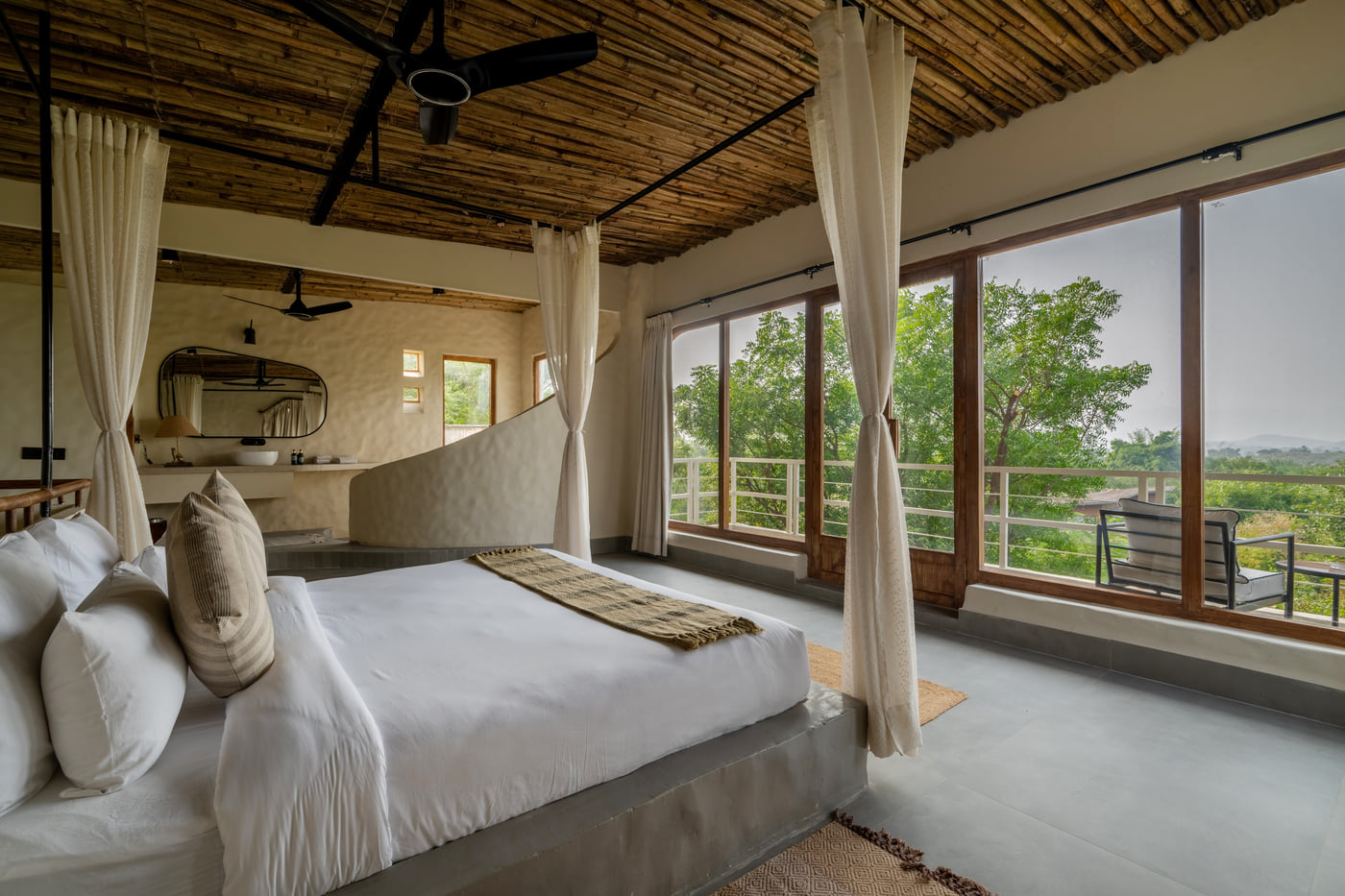
- Accommodation: 18 rooms across 3 categories: 9 Stone Cabins (900 sq. ft.), 3 Forest Bungalows (1,000 sq. ft.), and 6 Forest Villas (1,800 sq. ft. duplex), each with a king size bed, air-conditioning, and a tea & coffee maker
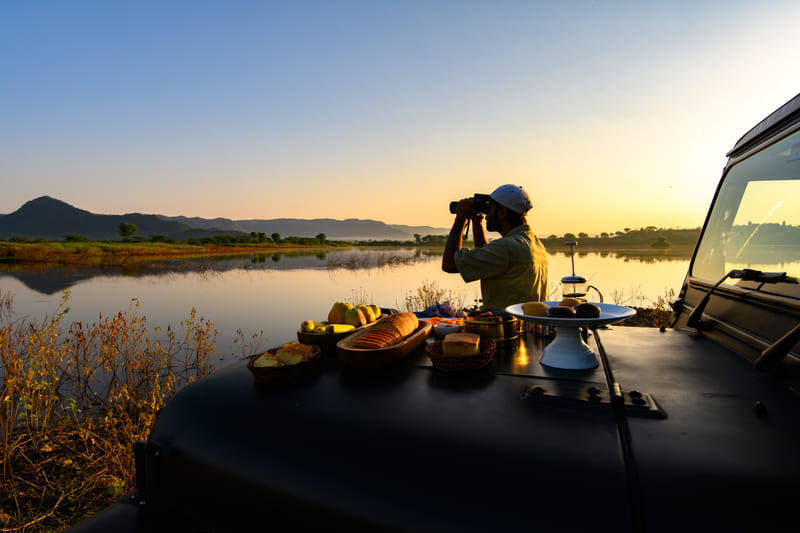
- Experiences: Wilderness drives, birdwatching tours across 470+ recorded species, boulder sundowner, starlight camp dinners, spa, and a rooftop swimming pool
- Dining: Seasonal menus using produce from the property's own pesticide-free kitchen garden; outdoor dining, high tea at Baithak, and wilderness breakfast options available
- Sustainability: Zero-mile sourcing, glass bottles with RO-filtered water, solar power, composting, and a no-plastic policy throughout the property
- Safari Access: Sariska National Park Safari can be arranged directly through Utsav Camp Sariska at the time of booking your stay, with a premium service for seamless access. Operating from October to June except Wednesdays
Bhangarh Fort stands apart from Rajasthan's many heritage sites because it offers entirely different visits at once: a serious study of 17th-century Rajput settlement architecture and a firsthand encounter with one of India's most enduring folk legends. The ruins are extensive, the setting dramatic, and the combination of silence and scale gives the place a weight that few historical sites in the region match.
Paired with a stay at Utsav Camp Sariska and a jeep safari through the Sariska Tiger Reserve, a visit to Bhangarh becomes part of a richer Alwar experience, one that moves between wildlife, history, and landscape in a way that few regions in India make as naturally possible.
FAQs
What is Bhangarh Fort, Alwar, known for?
Bhangarh Fort, Alwar, is known for being one of the most historically significant and supposedly haunted forts in Rajasthan. Built in 1573, the fort is a large ruined settlement.
What are the Bhangarh Fort timings?
Bhangarh Fort timings are 6:00 AM to 6:00 PM daily. Entry after sunset is strictly prohibited by the Archaeological Survey of India.
What is the best time to visit Bhangarh Fort?
The best time to visit Bhangarh Fort is between October and March, when temperatures are cooler, and the site is easier to explore on foot. Early mornings are ideal for photography.
How far is Bhangarh Fort from Alwar?
Bhangarh Fort is ~90 km from Alwar city. The drive takes around 2 hours via Rajgarh on state roads. Taxis and private vehicles are the most practical option.
Is Bhangarh Fort safe to visit?
Yes, Bhangarh Fort is entirely safe to visit during daylight hours. It is managed by the ASI, and visiting within the permitted 6:00 AM to 6:00 PM window is straightforward and well-trafficked by tourists.
Can I visit Bhangarh Fort from Jaipur as a day trip?
Yes. Bhangarh is ~85 km from Jaipur, a drive of approximately 2 hours. Many visitors combine it with a stop at Chand Baori stepwell in Abhaneri, which lies on the same route.
How far is Sariska from Bhangarh Fort?
Sariska Tiger Reserve is ~55 to 65 km from Bhangarh Fort, making the drive around 1.5 hours via Rajgarh. It is a practical pairing for travellers wanting wildlife and history on the same trip.
Where to stay while visiting Bhangarh Fort?
For a well-rounded experience, stay at Utsav Camp Sariska, located within easy driving distance of Bhangarh Fort. Surrounded by the Aravalli landscape, the camp offers nature-led stays, curated experiences, and convenient access to the Sariska Tiger Reserve.