
The hardest part of a holiday is often the first hour. Phones still buzz, the inbox still demands an opinion, and the mind keeps drafting replies it does not need to send. The art of doing nothing is the deliberate response to that hum. It is not laziness, and it is not a productivity hack. It is a way to step out of the loop long enough to remember what silence feels like. This piece looks at why the practice belongs in the wild, why the Aravallis around Sariska are one of the quieter corners to attempt it, and where to set up base if you want to try.
What the Art of Doing Nothing Really Means
The phrase has Italian roots in dolce far niente and Dutch parallels in niksen, but the idea is older and simpler than either translation suggests. The art of doing nothing is the choice to be present without producing anything. No journal entry. No photograph. No mental checklist of what you should be doing instead. The shift is small but unfamiliar. Most of us move through the day measuring it, and stopping that measurement feels uncomfortable for the first few hours. After that, something quieter takes over. You start noticing the temperature of the breeze, the order of birdcalls at first light, the way the colour of a hill changes between sunrise and noon. The point is not to achieve stillness. The point is to stop interrupting it.
Why Nature Is Where Stillness Lives
Cities are not designed for stillness. Every corner asks for a decision. Every shopfront sells a small upgrade. Even a quiet park sits inside a wider noise that the body keeps registering, even when the mind does not. A digital detox in nature works because the environment removes the cues that pull at your attention. There is no signal, often no plug point, and very little that needs your judgement.
The shift takes a little patience. After 1 or 2 days without a screen, mornings begin without the urge to scroll. Conversations stretch longer. The evening starts to feel like it belongs to you again, instead of slipping past behind a brightly lit feed.
Sariska: A Quiet Wilderness in the Aravallis
Sariska is most often associated with its tigers, but its quieter qualities deserve more attention. The reserve sits in the Aravalli range, one of the oldest fold mountain systems on the planet, and stretches across more than 800 sq. km. of dry deciduous forest, scrub, and ancient boulder country. The terrain is older than the Himalayas. The light has a particular dryness to it, especially in the cooler months between October and March.

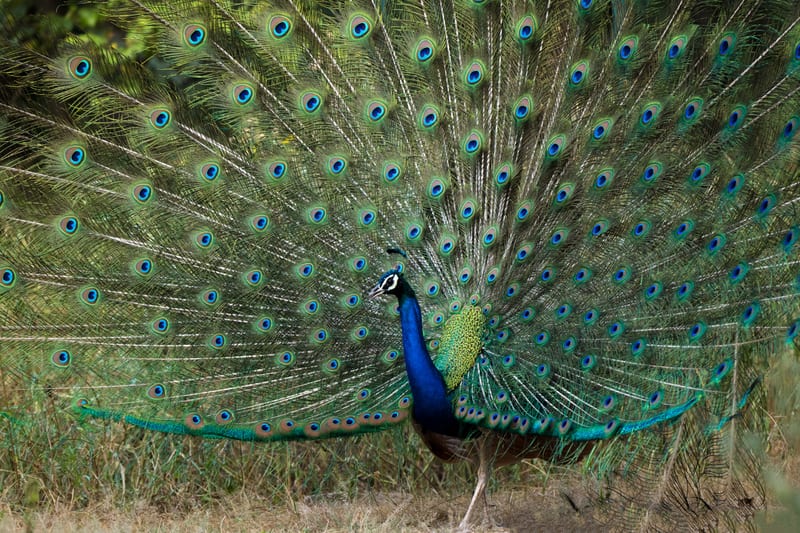
Compared with busier reserves further south, the area sees fewer day-trippers, and the villages around Tehla still keep their own slow rhythm. For travellers looking for a peaceful getaway near Sariska, the appeal is less about ticking off sightings and more about the silence between them. The wind in the dhok trees. The call of a peafowl at dusk. The long pause in between.
A Nature Retreat in Sariska Built for Slowing Down
Utsav Camp Sariska sits in Tehla, in a quieter corner of the buffer zone around the reserve, ~7 km from gate no. 2 of Sariska National Park. The property spreads across 7 hectares of native habitat, with deciduous forest on one side and the Aravalli boulders on the other. There are 18 accommodations across 3 categories, designed to keep groups small and the camp quiet.
As a nature retreat in Sariska, the brief was never to compete with city hotels on extras. Rooms have no in-room service, mornings begin when the birds decide, and the closest thing to background music is the wind. Over 85% of the team is from Tehla and the villages around it, so the rhythm of the camp follows the rhythm of the land it sits in.
How a Slow Day Unfolds Here
Doing nothing is harder to plan than it sounds. Most retreats end up scheduling stillness, which defeats the point. The structure here is intentionally light. The art of doing nothing at the camp tends to look like this:

- Sitting in Silence: On a stone ledge or a wooden chair, with no plan beyond watching the light change.
- Listening to Natural Sounds: From peafowl at first light to langurs in the canopy, without trying to identify every one.
- Slow Mornings without Schedules: Breakfast happens when you are ready, and the day does not begin on a clock.
- Observing the Landscape: From a vantage point near the boulders, where the eye learns to track movement instead of scrolling.
When You Want to Move a Little
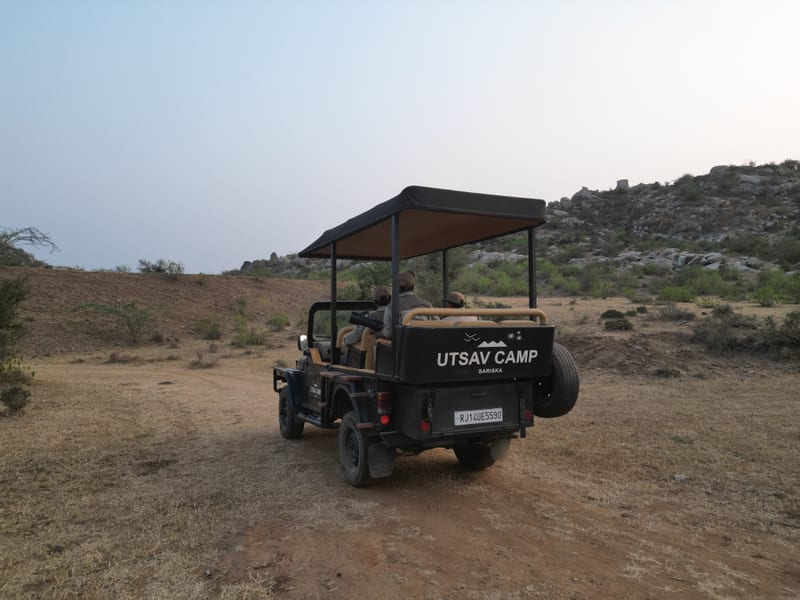
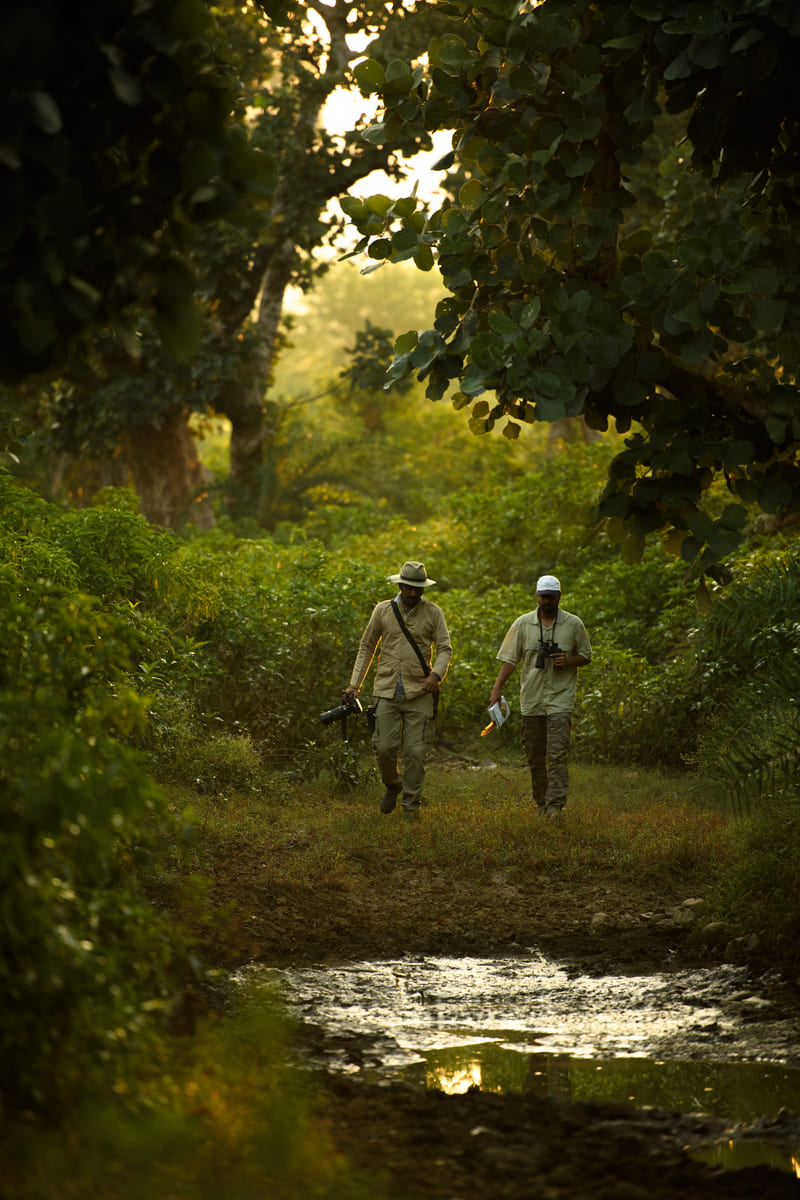
Stillness does not need to be total. Most guests find their own pace within a day, and that pace usually includes a little movement. The naturalist-led wilderness walks last around 1 hour, slow enough to read tracks in the dust rather than rush past them. A safari into Sariska National Park is available between October and June from dawn to dusk, and runs about 4 hours. Meals can be taken indoors or, more often, outside, with the lounge spilling onto a quieter terrace at sunset. The structure is deliberately loose. Walk if you want to walk. Sit if you want to sit. Watch a peafowl cross a clearing for 30 minutes and decide nothing else needs doing that morning.

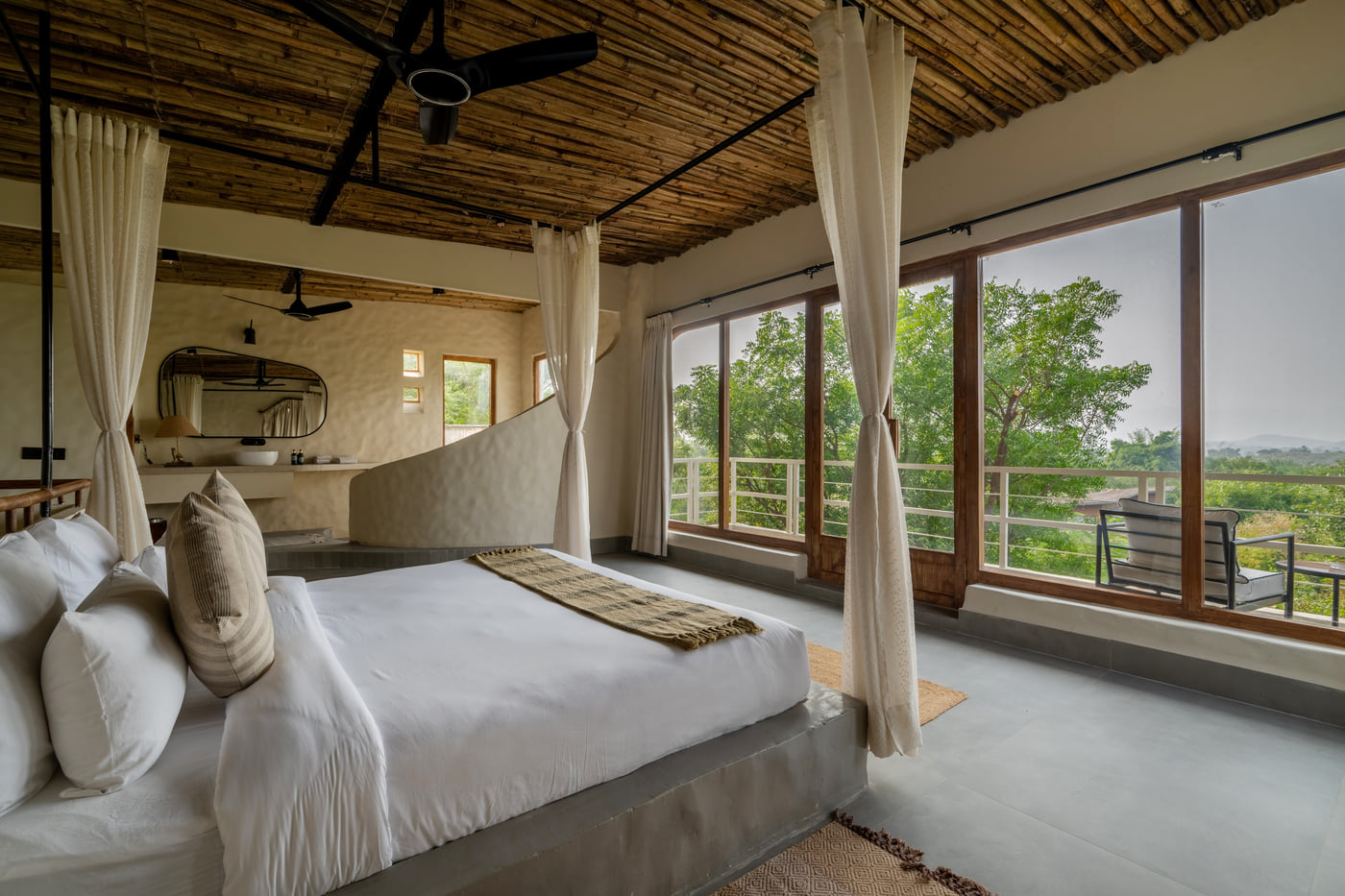
Among the 3 accommodation types, the Stone Cabin is the most deliberate about slowness. Built entirely of local stone and set at 900 sq. ft., each cabin has a king size bed indoors and a stargazing patio bed outdoors, which guests tend to use longer than they expect. Water is heated by solar panels. Room service is intentionally absent. The decision is not about cost. It is about the idea that meals shared at a table, eaten without trays, taste better and slow the pace down further. The cabin opens to its own quiet patch of garden, where a single chair under a tree handles most of the day’s plans. For travellers committed to the art of doing nothing, it is the simplest room to disappear into.
Where to Practise this at Utsav Camp Sariska
If you want to attempt this somewhere designed for it, the stay options at Utsav Camp Sariska sit in the Tehla region of the Aravallis, a short drive from gate no. 2 of Sariska National Park and around a 4-hour drive from Delhi. The camp runs on a 100 kW solar setup, sources food from a chemical-free in-house garden, and replaces plastic bottles with glass and reverse-osmosis water. Another noteworthy thing is that the cooler months between October and March bring the longest mornings and the most active wildlife on the camp’s own terms.
A Different Kind of Travel
Most of us travel to do more: more sights, more meals, more proof. The art of doing nothing is a quieter trip. It rewards the small reset, the slow morning, the conversation that runs past its useful length. The Aravallis are an unexpectedly good place to attempt it. The hills are old enough to make a week feel small, the silence has weight, and Sariska has the kind of wildness that does not need to be performed. Take a few days. Let the camp set the tempo. Find out what the day looks like when you stop asking it to be productive.
FAQs
When is Sariska at its quietest for travellers?
The cooler months from October to March are most pleasant for long mornings outdoors and slow afternoons, and they coincide with the safari season at Sariska National Park. For an even quieter trip, mid-week stays in November and February tend to draw the fewest travellers.
How far is the camp from Delhi and Jaipur?
The camp is roughly a 4-hour drive from Delhi and about 3 hours from Jaipur, depending on traffic and route. Most guests choose the drive over the train for the buffer it gives them on either end of the trip.
Is there a mobile signal and Wi-Fi at the camp?
Mobile connectivity is patchy in the Tehla region, which suits a digital detox in nature. Wi-Fi is available in common areas if you need it, but most guests stop checking by the second day.
What does a 3-day stay focused on doing nothing look like?
A typical rhythm is slow mornings around the property, an unhurried lunch, a short walk, or a sit at the boulders in the afternoon, and a long evening outdoors. The art of doing nothing does not need a schedule, but a loose pattern helps the first day feel less awkward.
Are safaris and activities compulsory?
No. Every experience at the camp is optional. Some guests book a Sariska safari and a wilderness walk. Others read for 3 days and leave more rested than any plan could have managed.
Is the camp suitable for solo travellers looking for a peaceful getaway near Sariska?
Yes. The camp is well-suited to solo guests, especially those looking for a peaceful getaway near Sariska. Meals can be taken privately or with other guests, and the team is used to giving solo travellers the space they came for.
What should I pack for a slow retreat in the Aravallis?
Layers for the cool early mornings, neutral colours for walks, a book you have been meaning to start, and sturdy shoes. Most importantly, fewer devices than you think you need.